The full UN News article, in English
UN News published this text in Chinese with the audio on 4 September 2013 under the headline 消除障碍,敞开大门:联合国新邮票为残疾艺术家喝彩 ("Break Barriers, Open Doors: new UN stamps celebrate artists with disabilities"). English translation below, with names and titles given as the UN uses them in English.
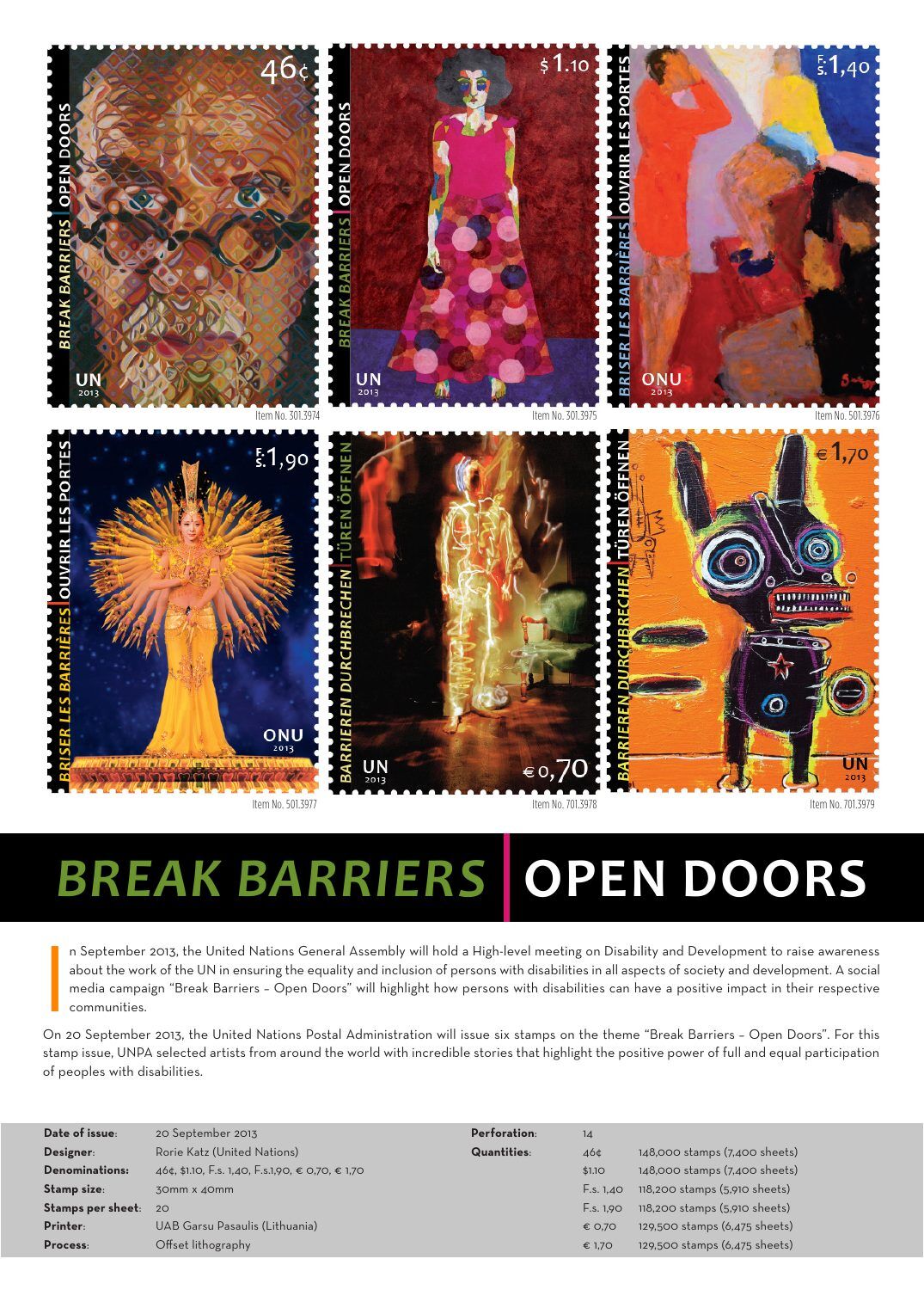
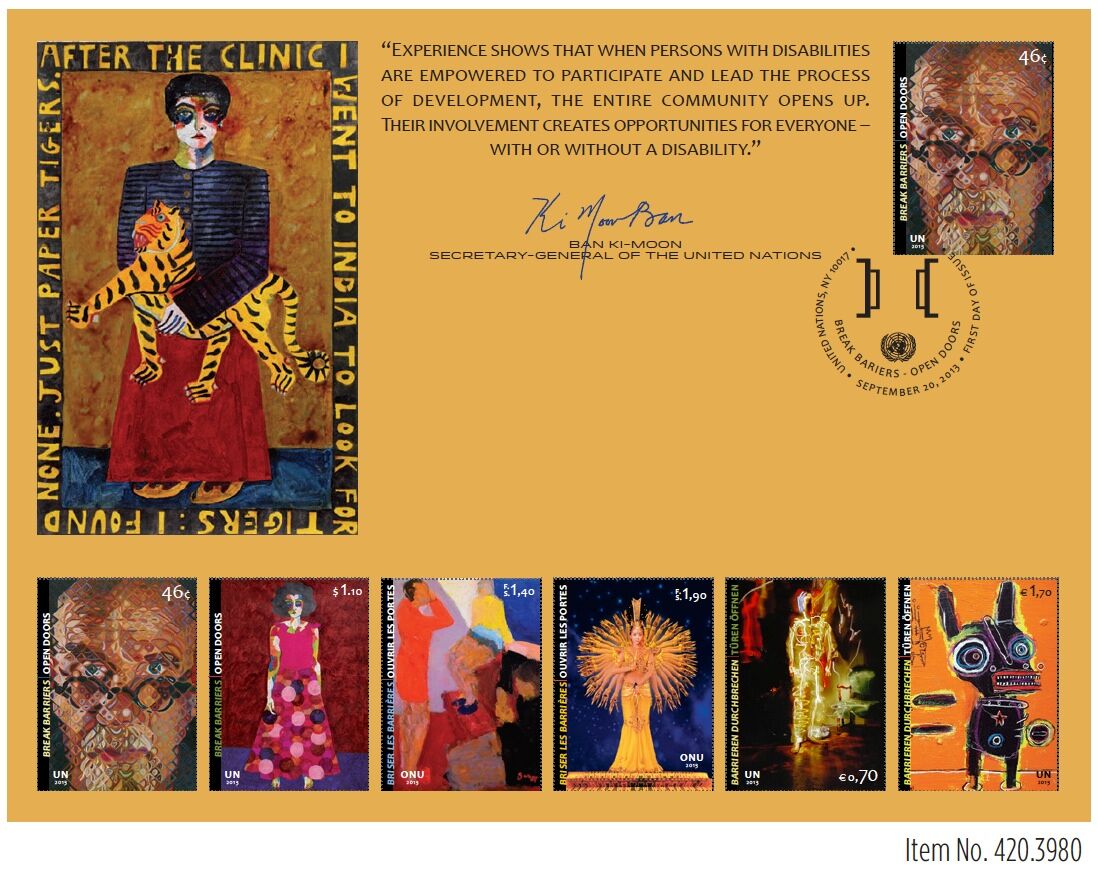
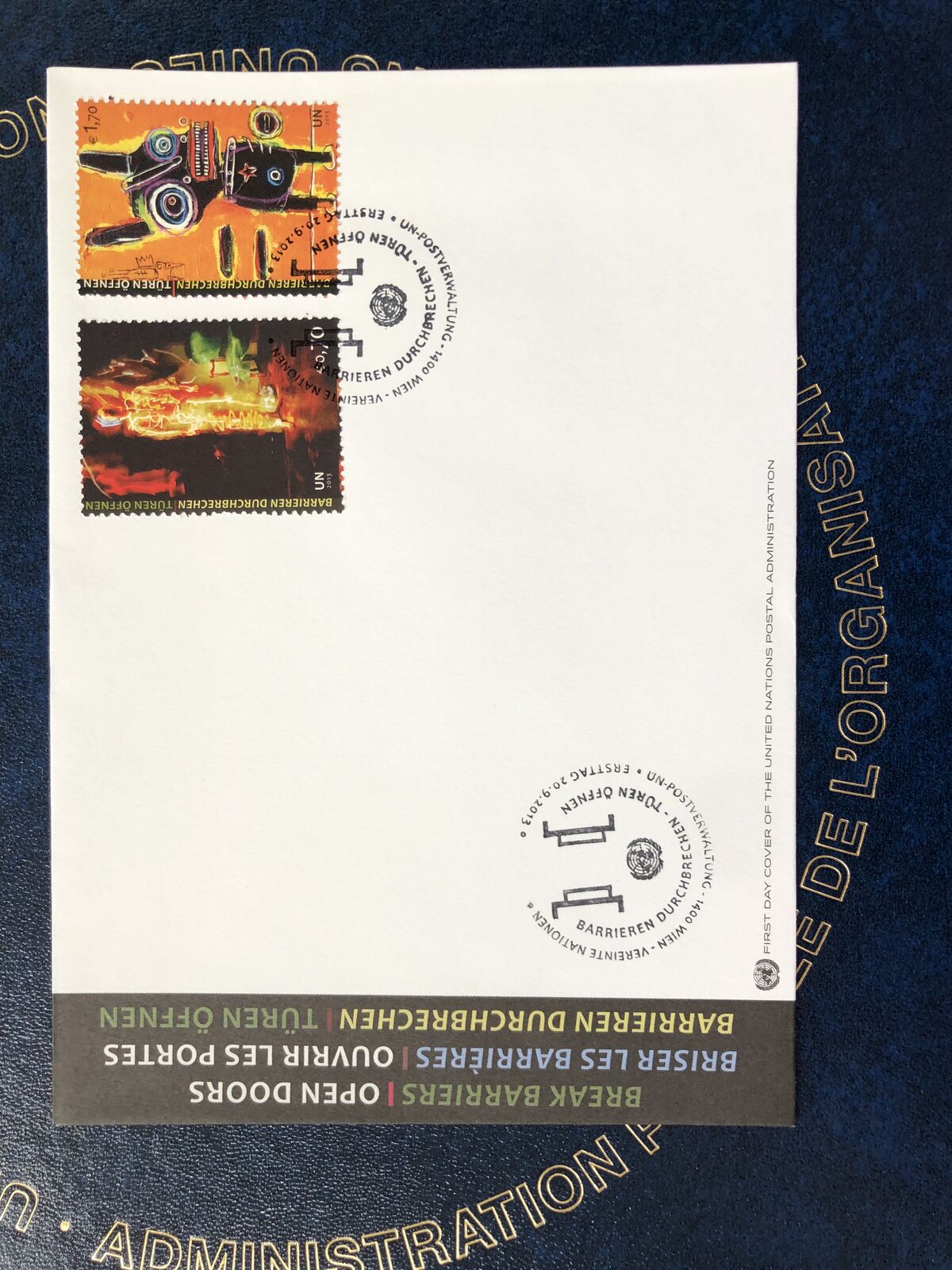
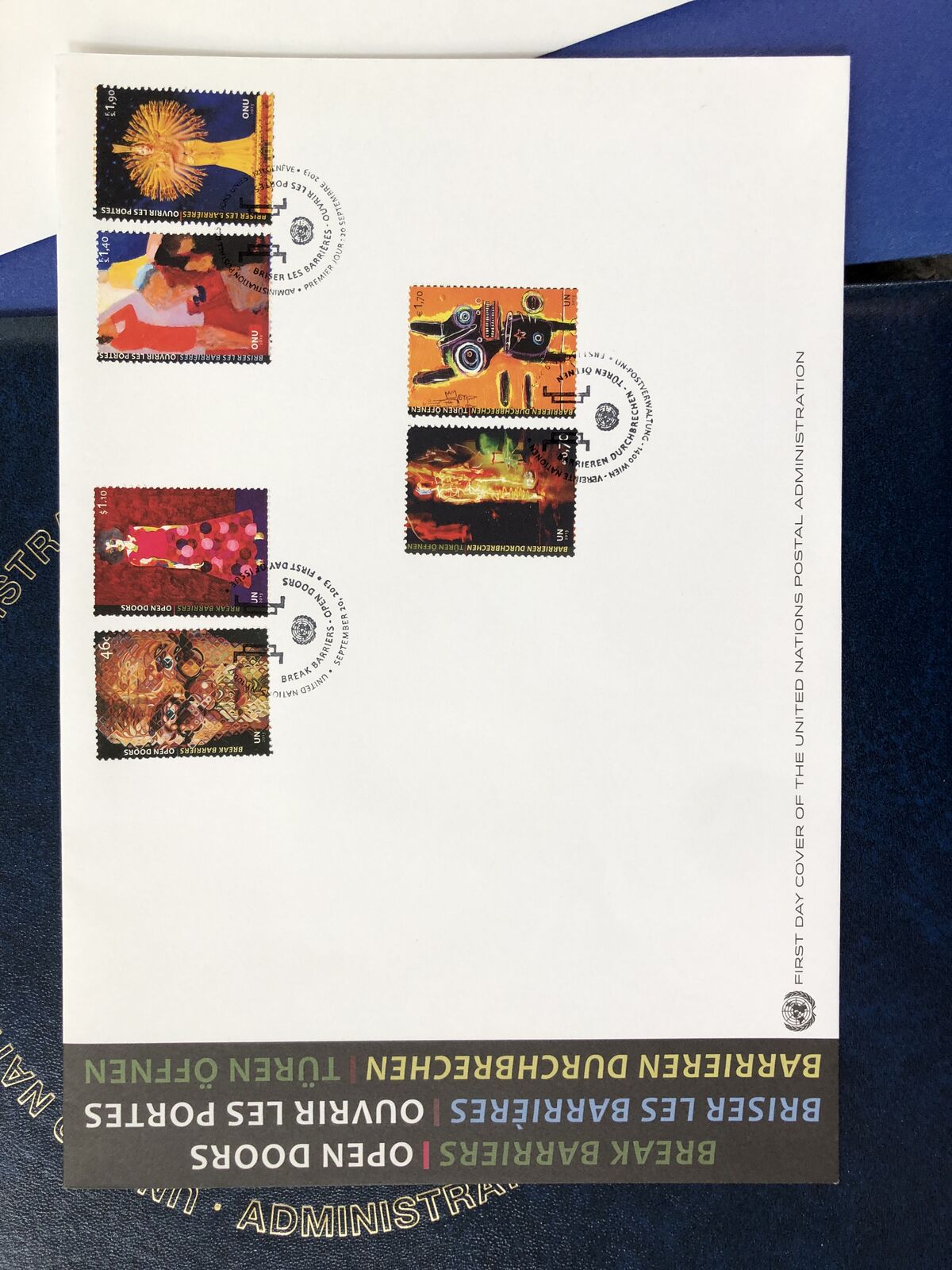
As the postal administration of the United Nations, an intergovernmental organization, the UN Postal Administration has advantages that some national post offices lack. It chooses global themes for its stamps, and the artists behind them come from all over the world. That is why UN stamps have always been popular with collectors for their high artistic and commemorative value. In late September, the Postal Administration will issue a set of six art stamps showcasing the work of six artists and groups of artists with disabilities, including a photograph of the classic dance Thousand-Hand Bodhisattva by the China Disabled People's Performing Art Troupe. UN Radio's Huang Liling reports.
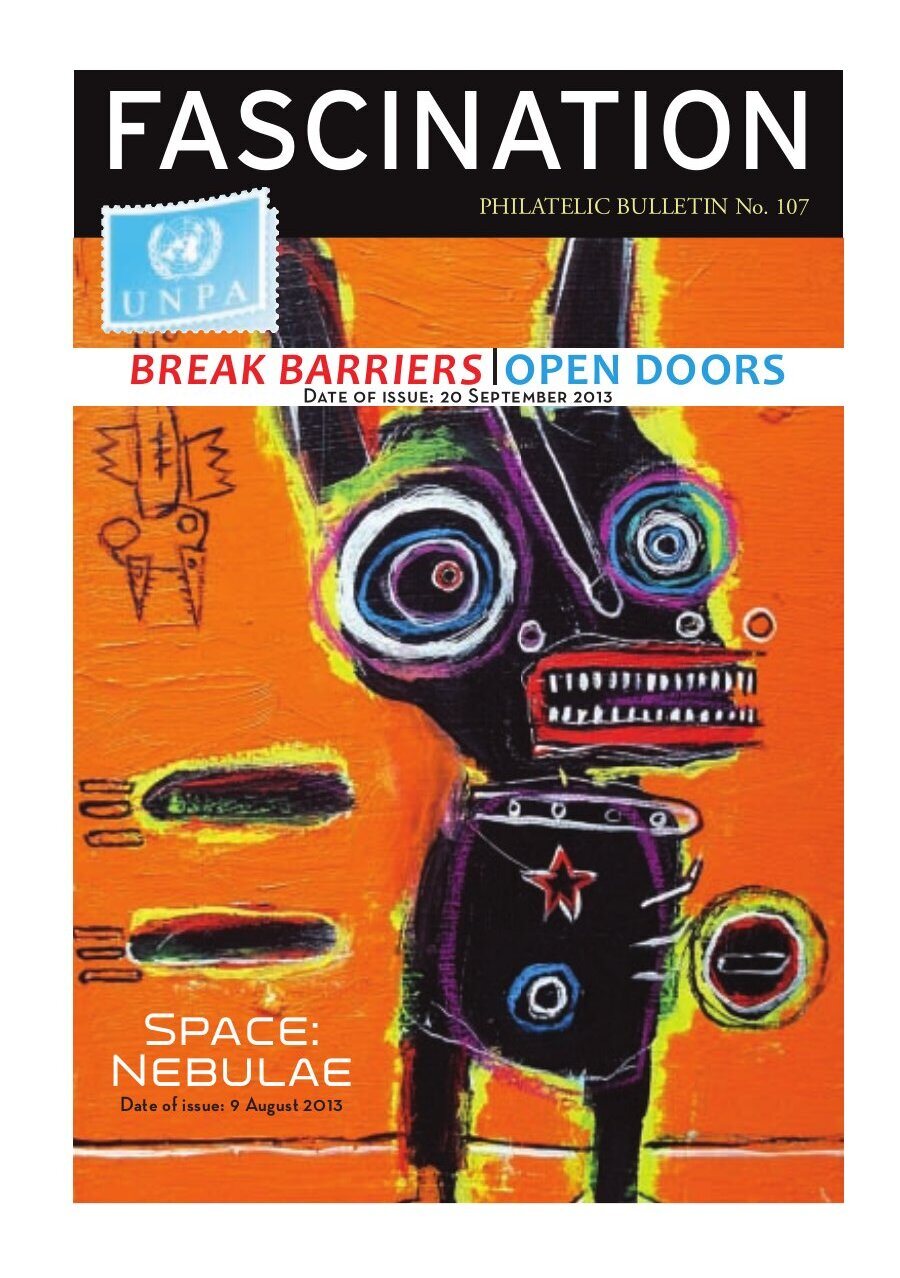
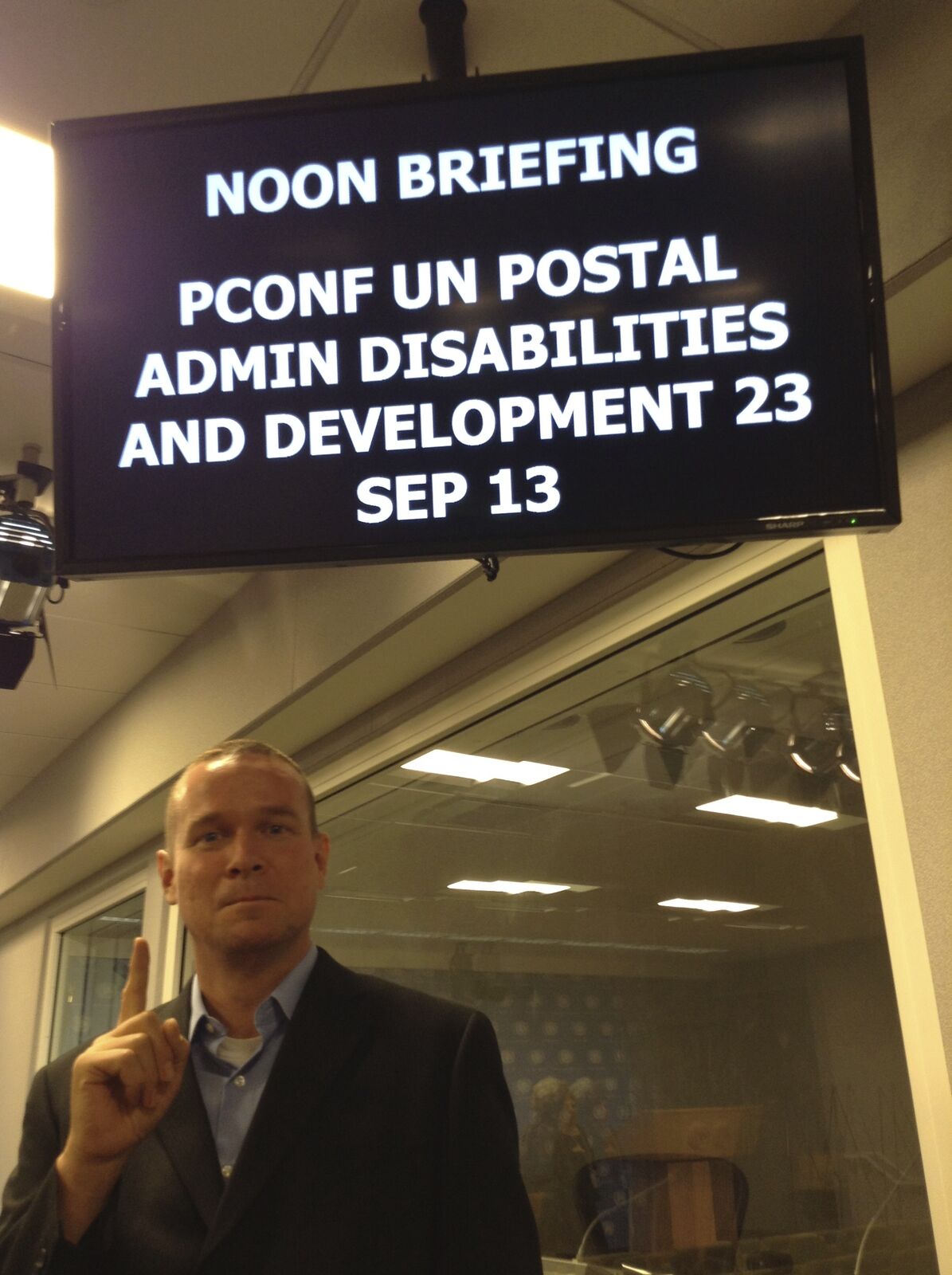
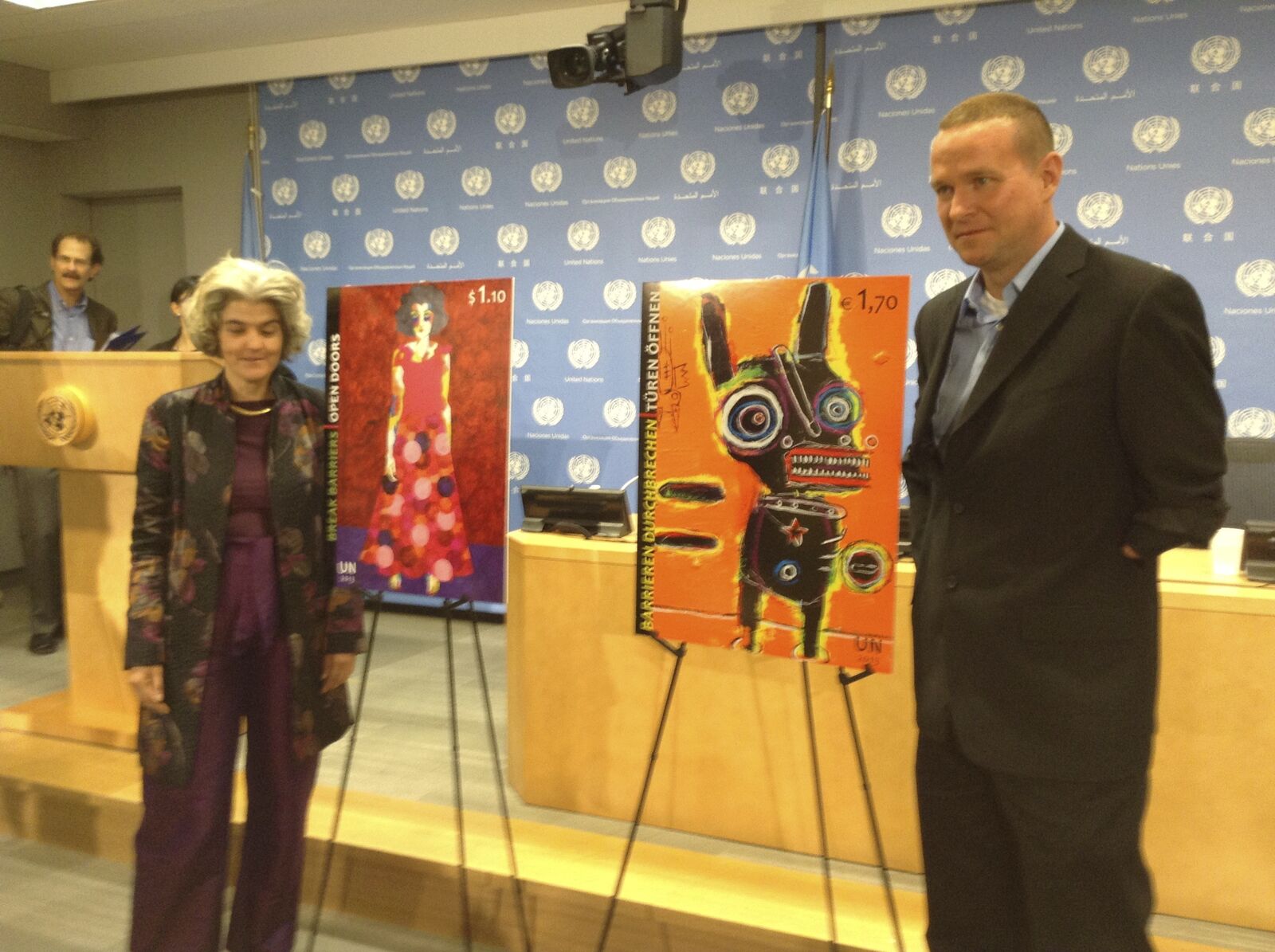
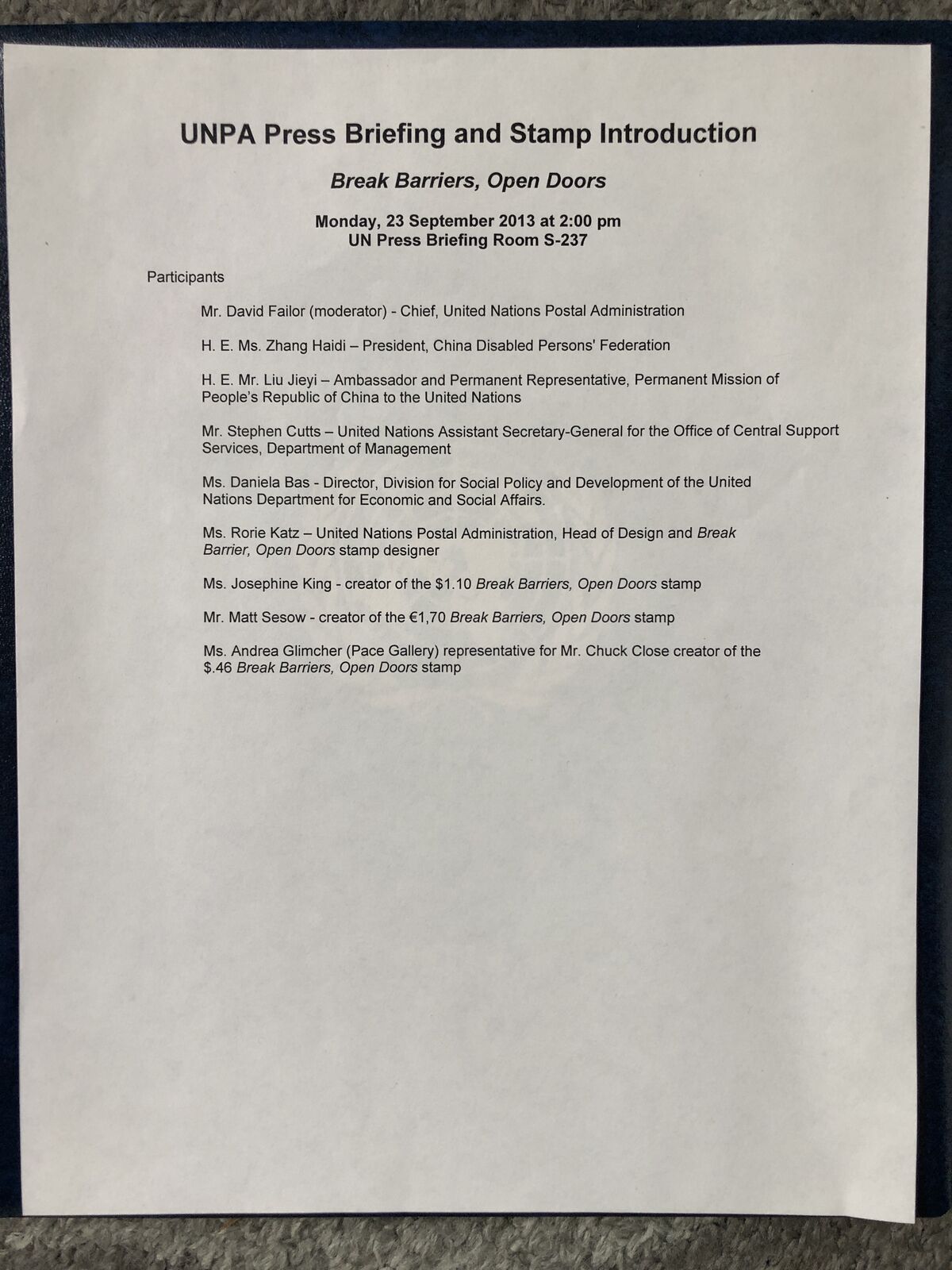
The UN Postal Administration issues stamps on seven themes each year, so it chooses its themes with great care. To coincide with the General Assembly's High-Level Meeting on Disability and Development, to be held at UN Headquarters in New York on 23 September, the Postal Administration will issue a set of stamps showcasing the talent of artists with disabilities on 20 September.
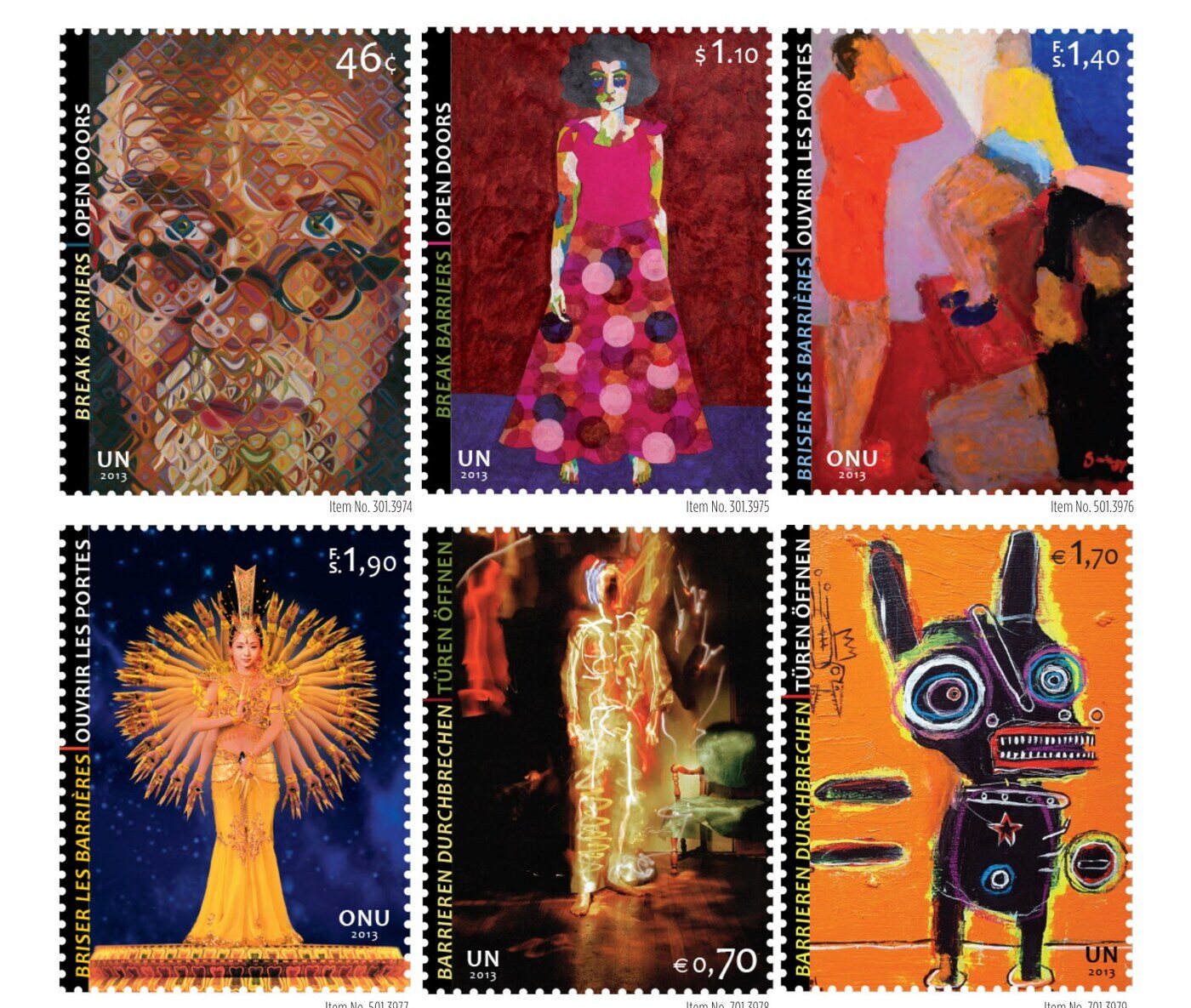
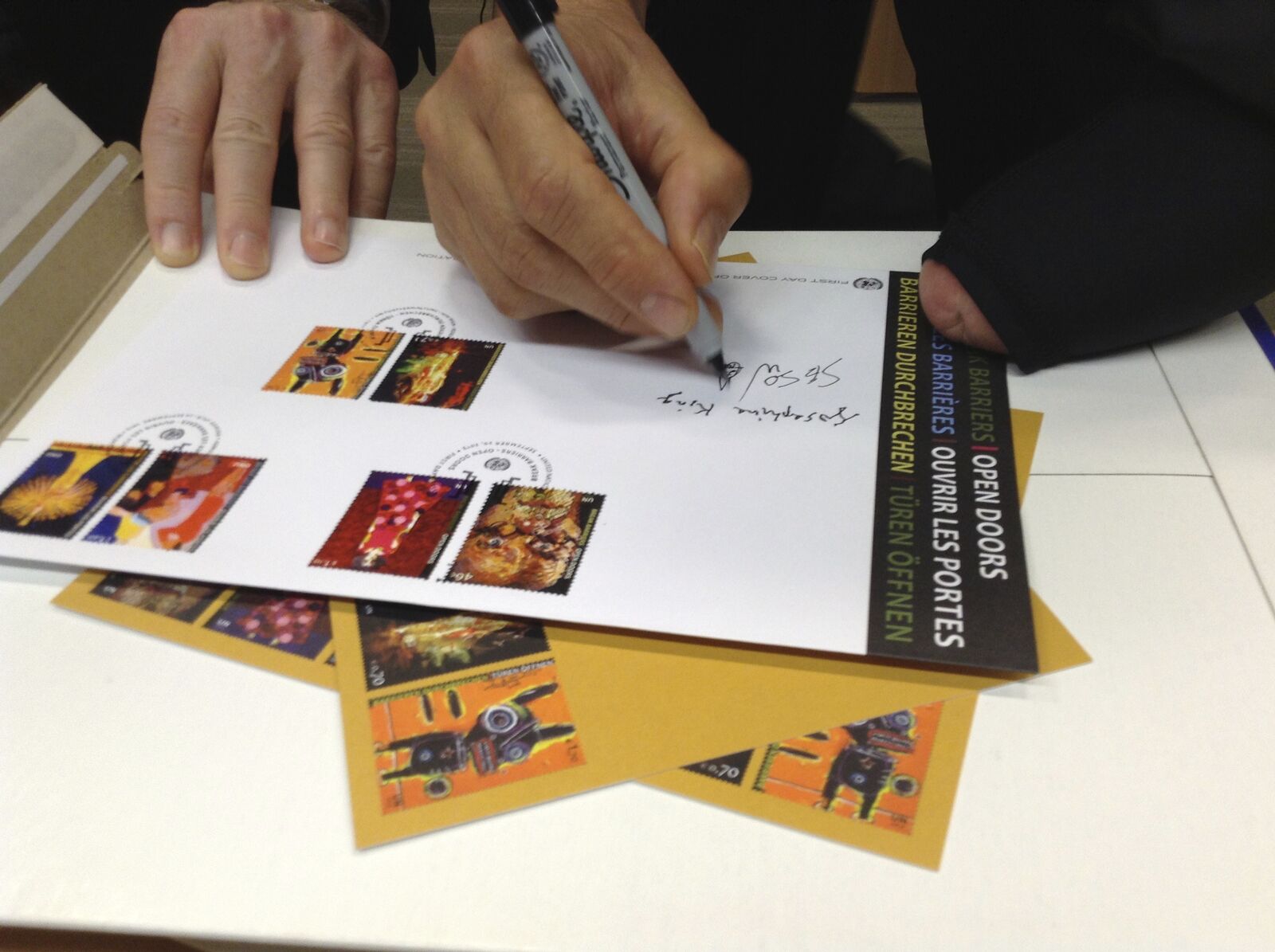
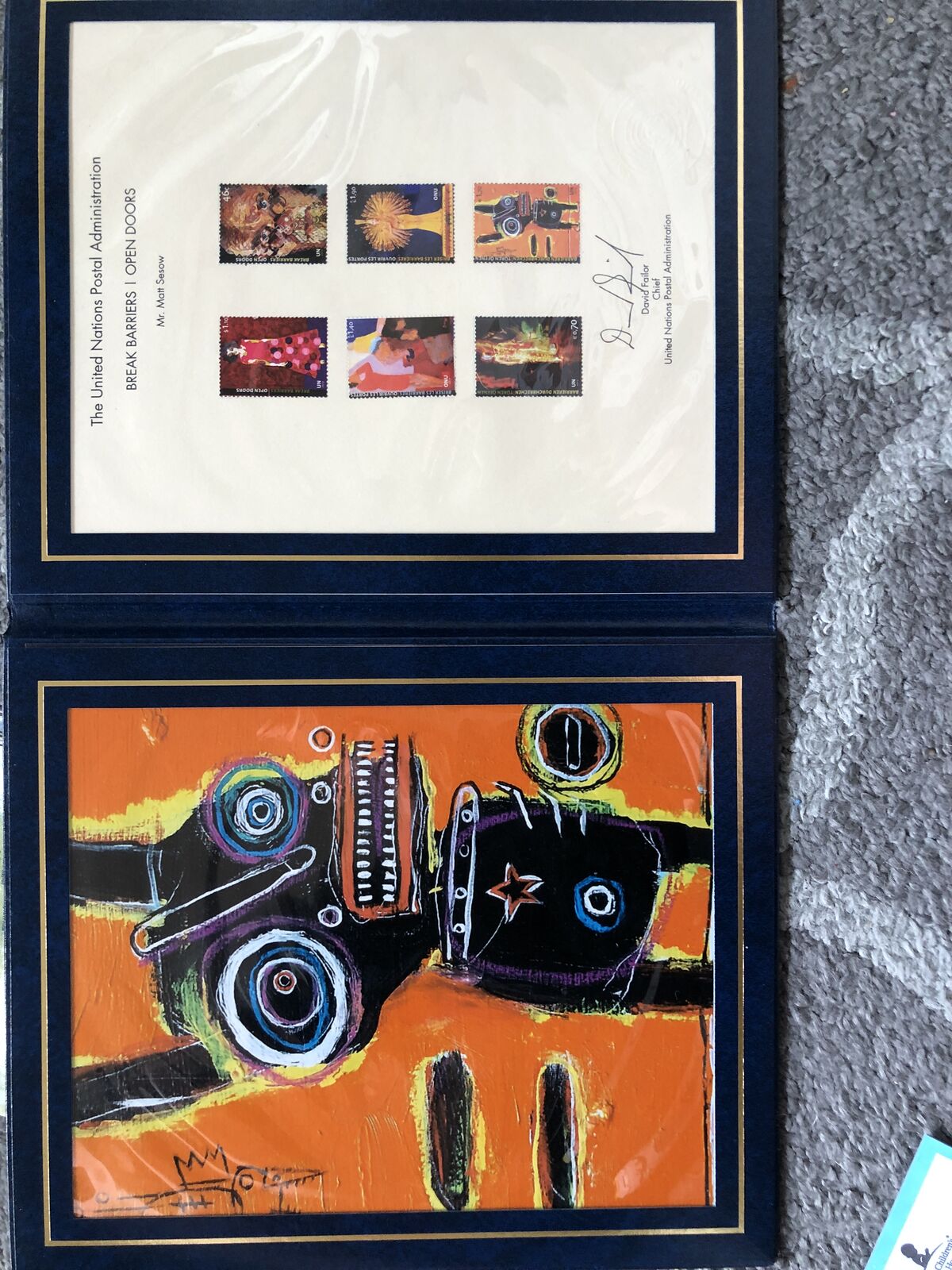
The Chief of the Postal Administration, David Failor, said the theme of the stamps is "Break Barriers, Open Doors".
Failor: "In the course of researching this theme, we discovered the extraordinary artistic talent of many artists with disabilities. Their dedication to creating world-class work will inspire everyone."
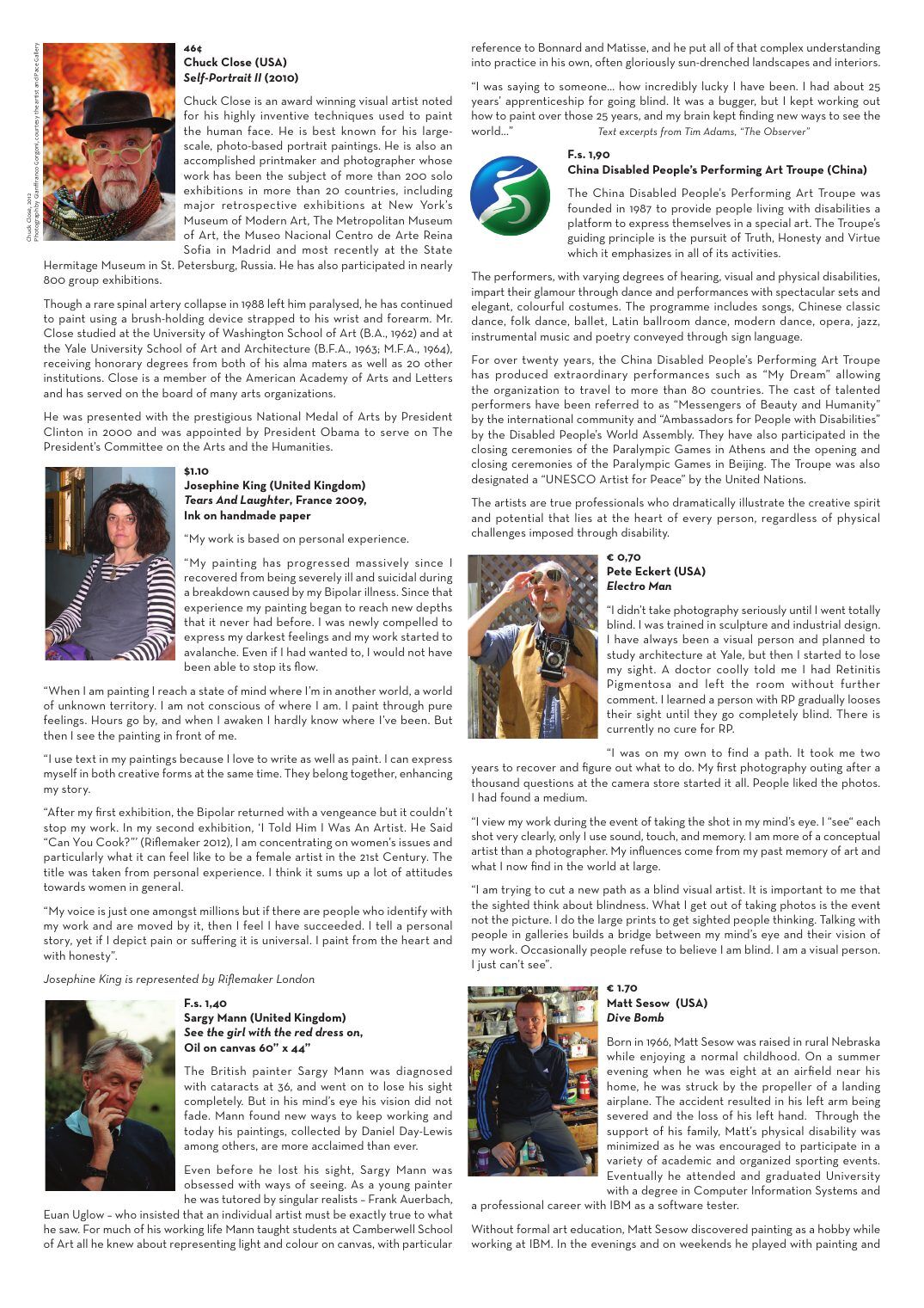
Chuck Close is perhaps the best known of the selected artists. He is a New York-based visual artist who was paralysed in 1988 by a spinal artery collapse. He was awarded the National Medal of Arts by President Clinton in 2000 and appointed to the President's Committee on the Arts and the Humanities by President Obama. His work is shown and sold in galleries worldwide, and he has received honorary degrees from twenty universities. The UN stamp features a self-portrait he made in 2010.
Failor: "Close straps his paintbrush to his forearm and wrist and paints huge self-portraits and other works, which is incredible. It takes enormous effort to paint work like that, but if no one told you, you would never think the painter had a disability."
Josephine King is a British artist who has bipolar disorder. The illness causes extreme mood swings, from joy, excitement and agitation to sadness and despair, again and again. The UN stamp features her 2009 self-portrait Tears and Laughter, painted in France. Josephine King has said that her paintings resonate with people because suffering is universal, and that she paints from the heart to express her feelings.
Failor: "Josephine King is a very unique person. Bipolar disorder can take away a person's ability to live a normal life, and it has caused her a great deal of distress. Painting became her outlet for her emotions. Her work is mostly introspective and shows the pain and suffering she has lived through. Her ability to turn those emotions into beautiful works of art is incredible."
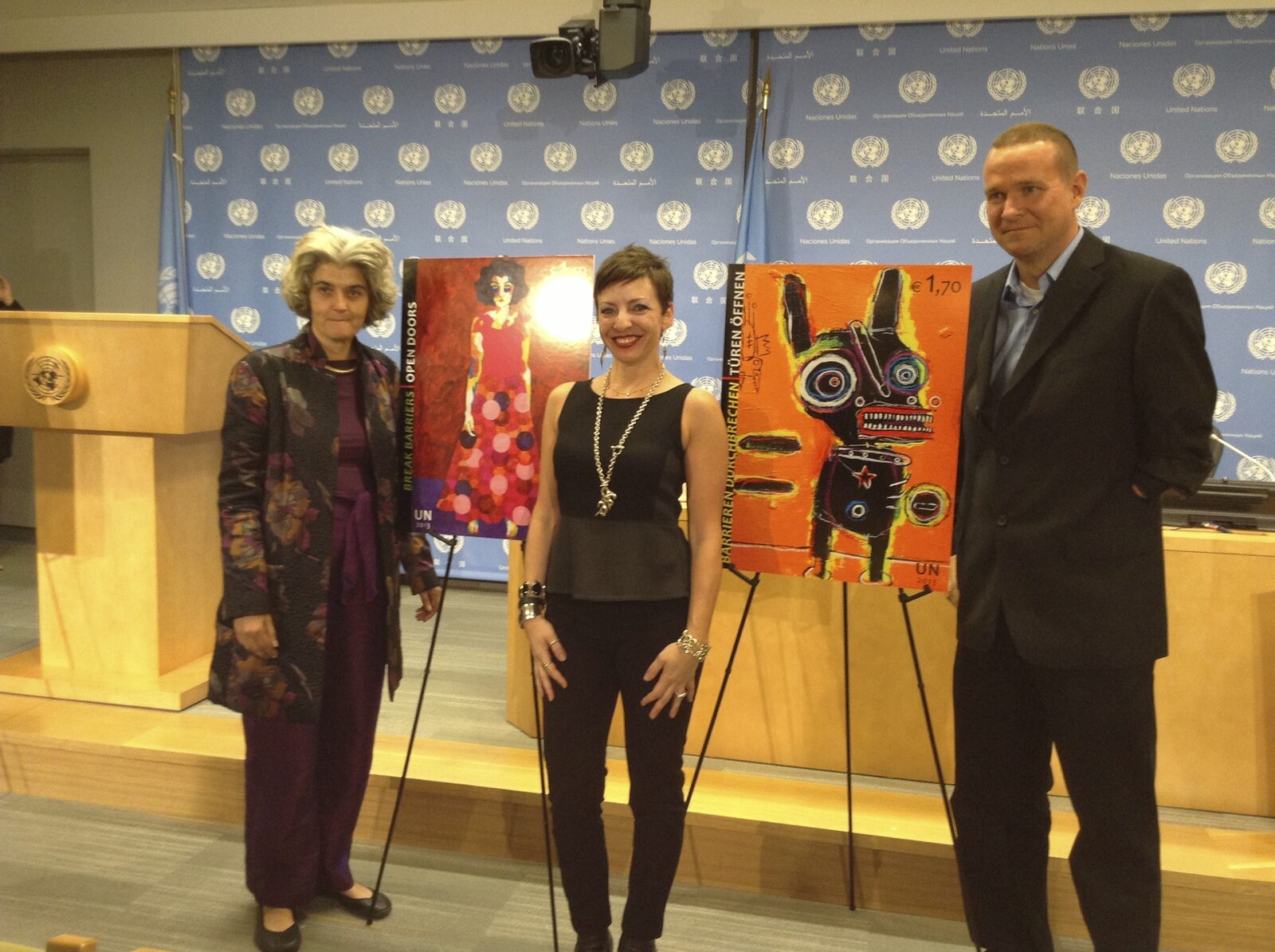
Sargy Mann is also from England. He was diagnosed with cataracts at 36 and later became completely blind, but in his mind he still feels he can see. In fact, his work is more sought after now than before he lost his sight. His selected work is titled See the girl with the red dress on.
Failor: "Sargy Mann had a 25-year apprenticeship in painting before cataracts took his sight, and he already had a large body of work. Blindness did not stop him from painting, and he never lost his imagination. When he paints, he first dots the canvas with his brush and then paints over it. This work shows two people talking and enjoying a good time together."
The fourth stamp is a photograph of an image familiar to almost every Chinese person in the world: a performance of the classic dance Thousand-Hand Bodhisattva by the China Disabled People's Performing Art Troupe. Failor said the troupe has performed the dance in more than eighty countries, and its expression of truth, goodness and beauty has moved people all over the world.
Failor: "The troupe's performers have hearing impairments, visual impairments or other disabilities, but their performance is exquisite in every respect, from the dance and the music to the movement and their beautiful golden costumes. We use their photo on our promotional posters because the image is simply breathtaking."
The selected works also include a photograph titled Electroman by American artist Pete Eckert. Eckert trained in sculpture and industrial design before losing his sight, and took up photography afterwards.
Failor: "Eckert's work is more avant-garde and very creative. What impressed me most is that although he is blind, he firmly believes he is a visual artist. He says he just can't see. He creates his art with sound, touch and his vivid memories."
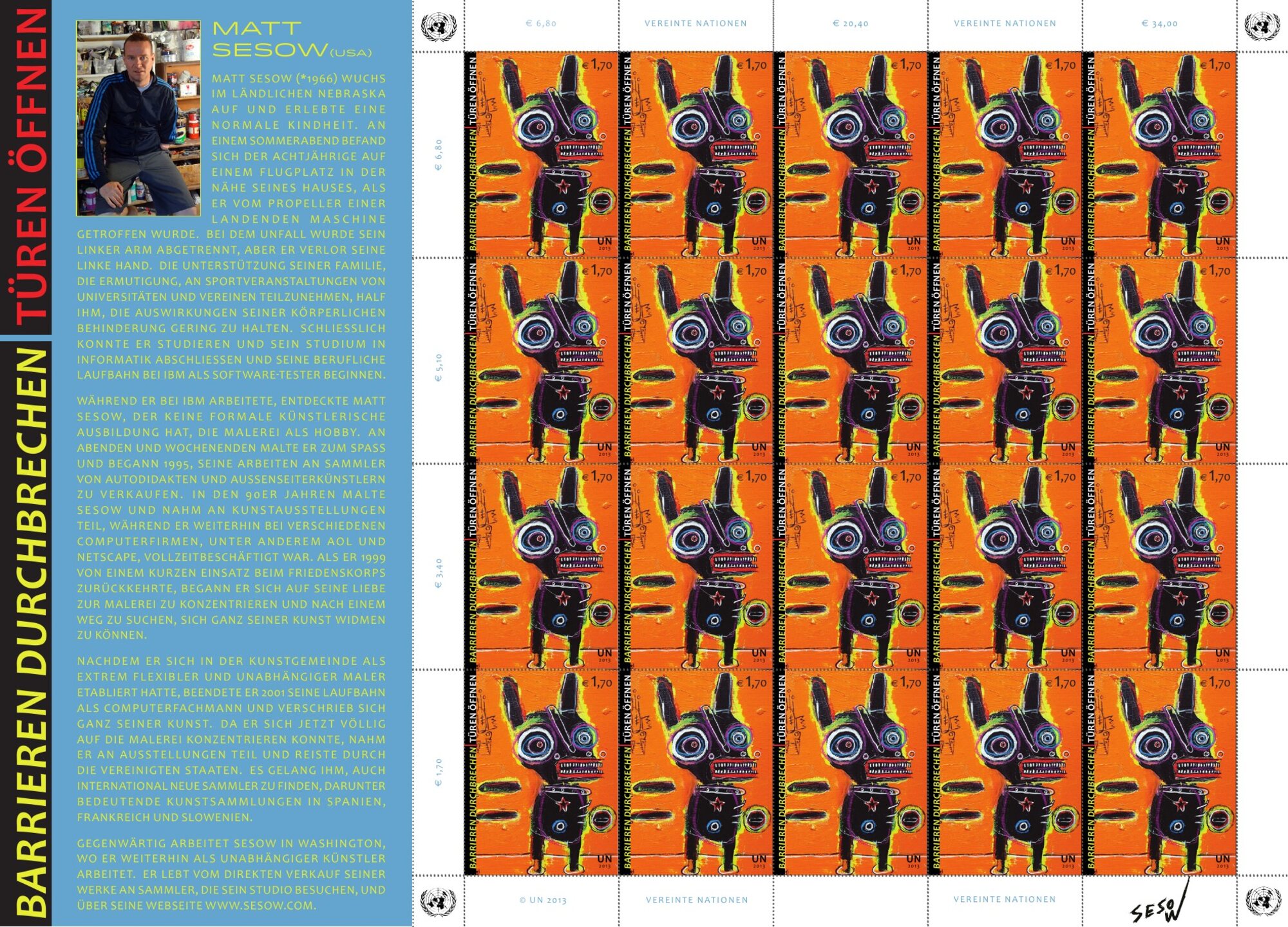
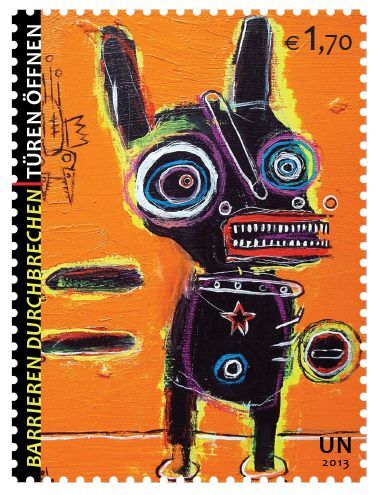
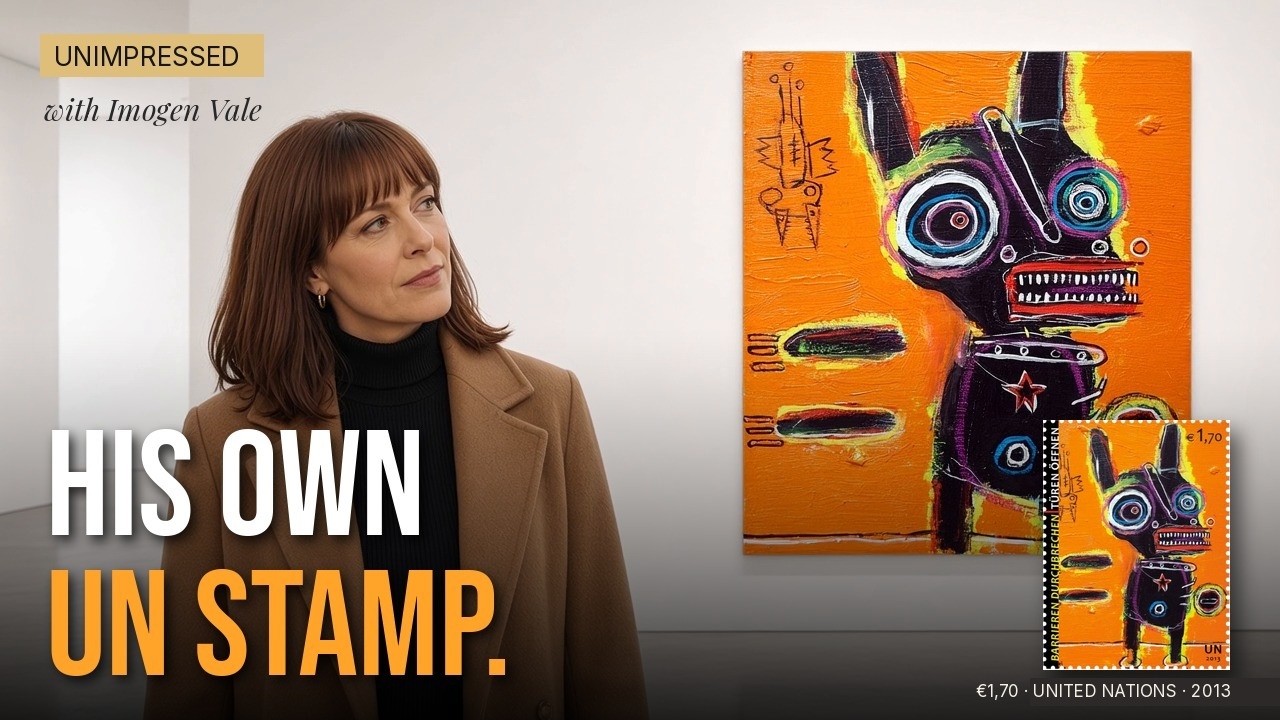
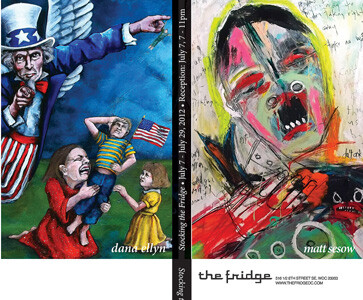
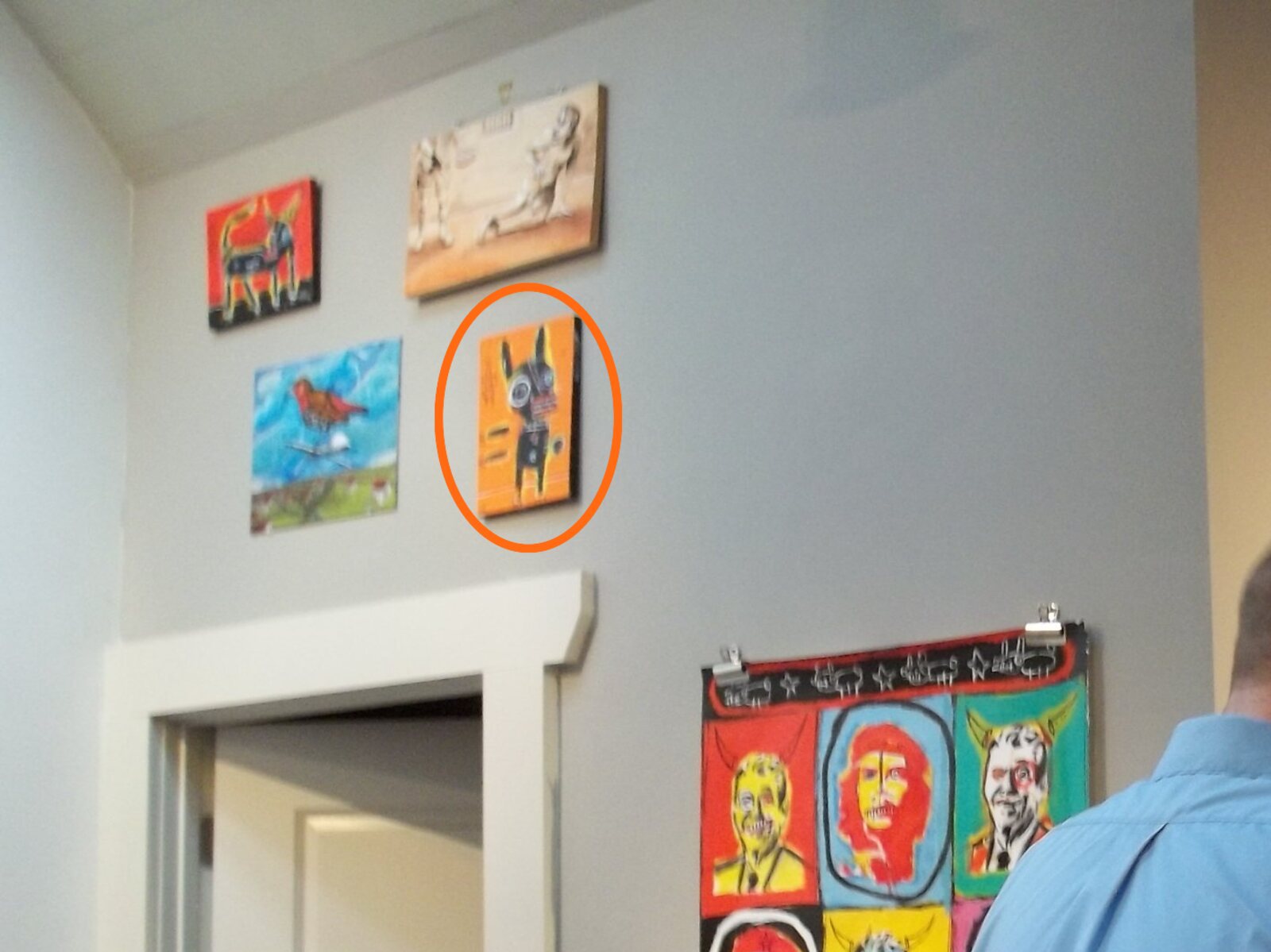
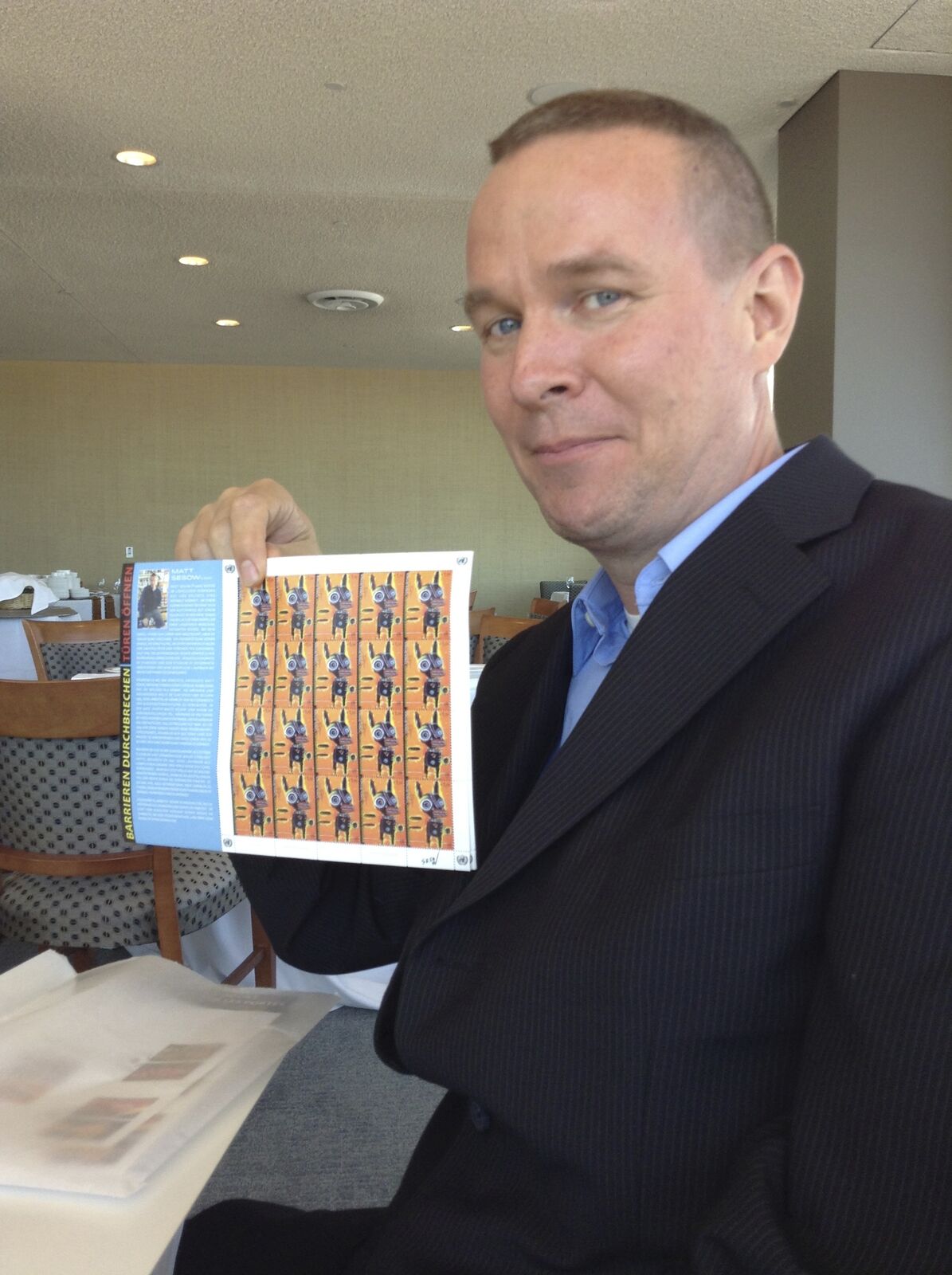
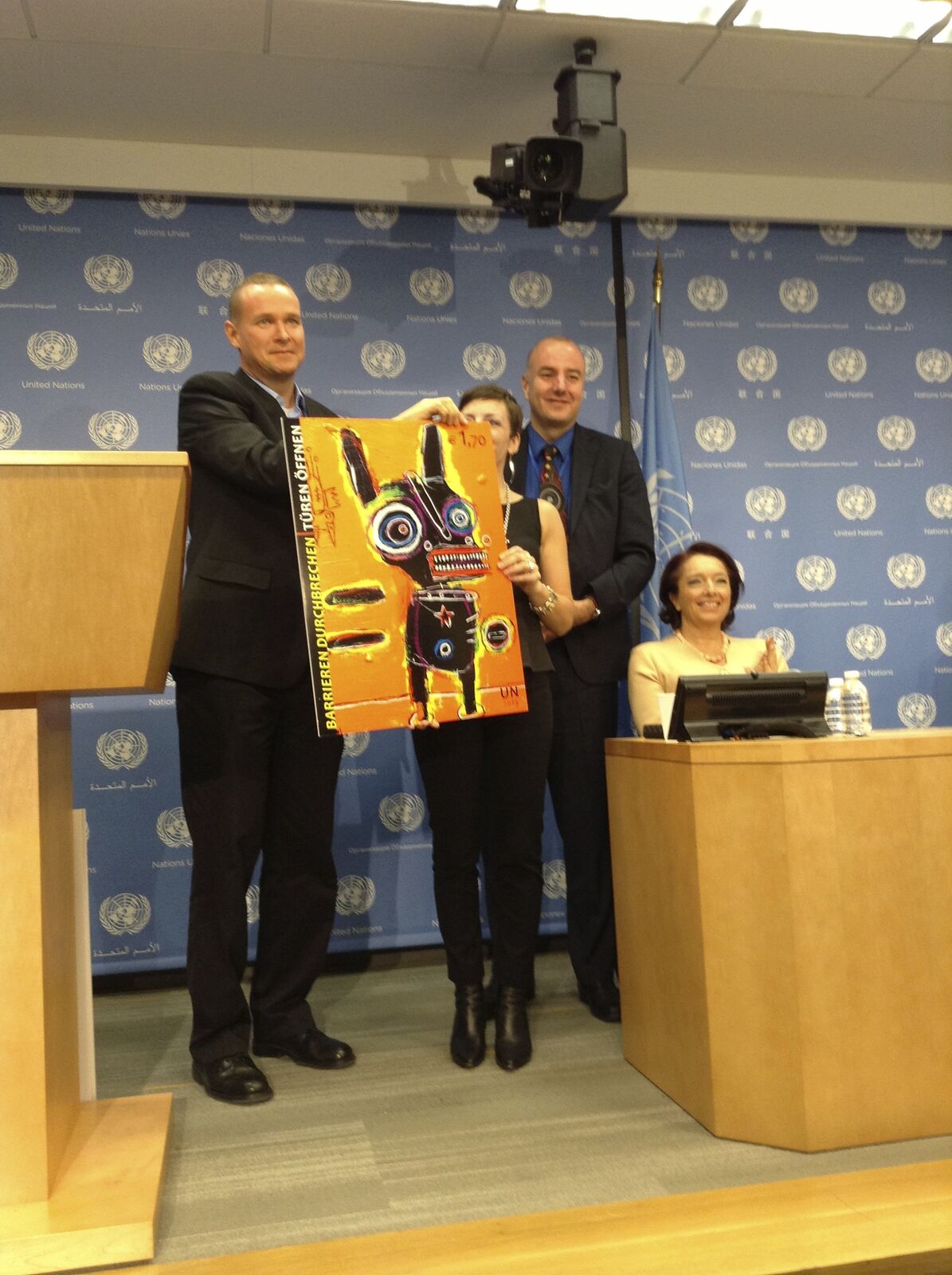
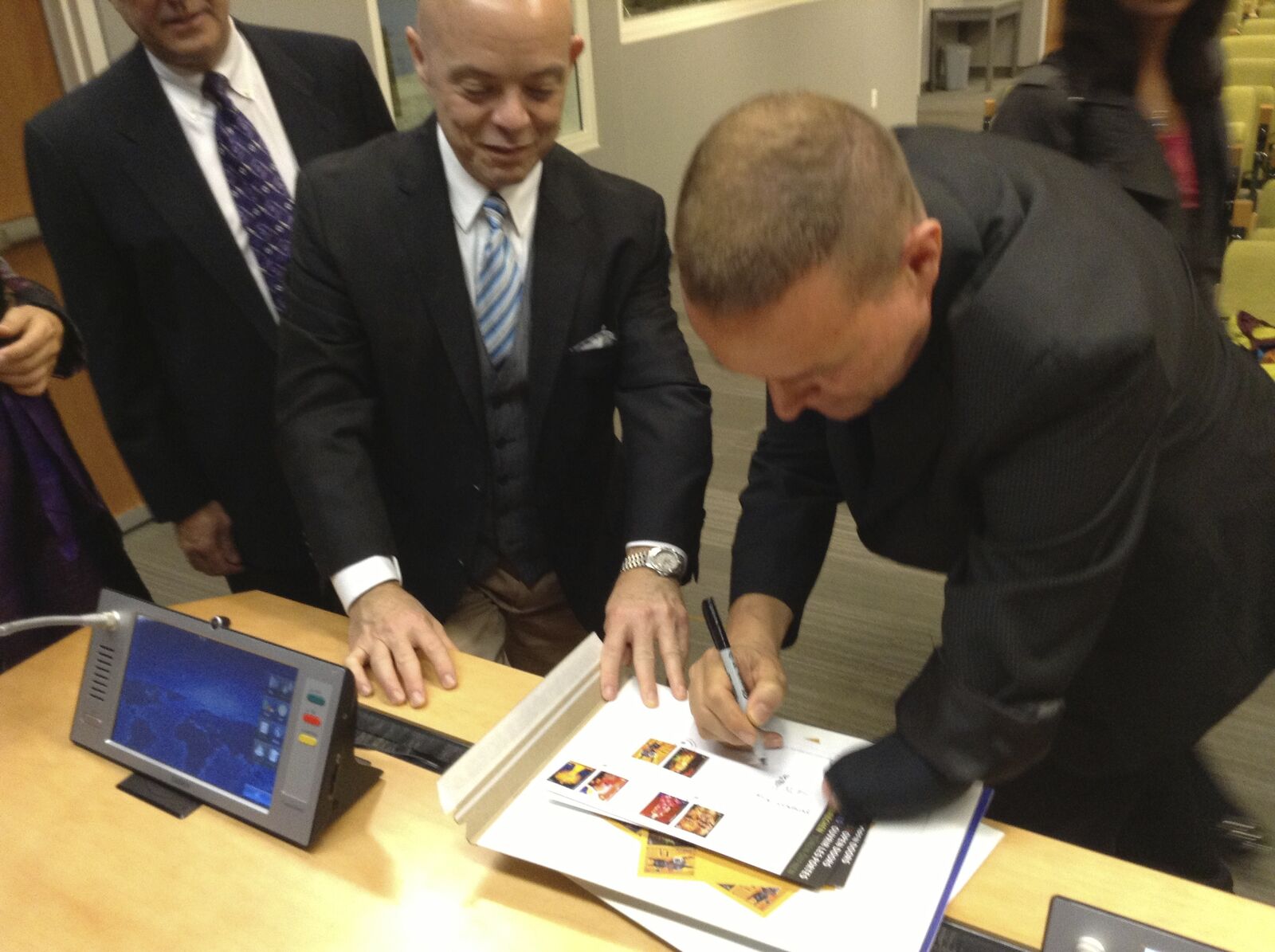
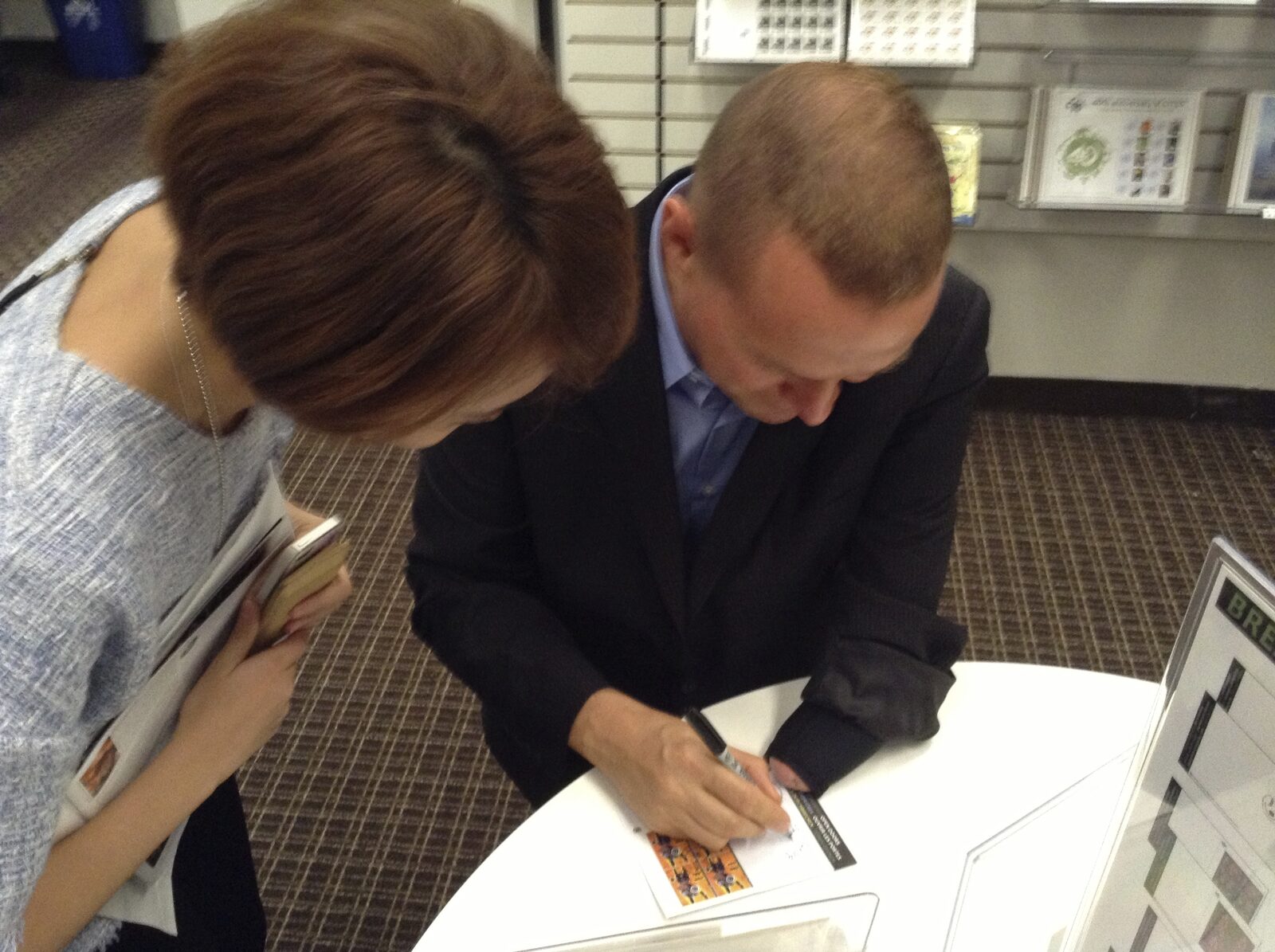
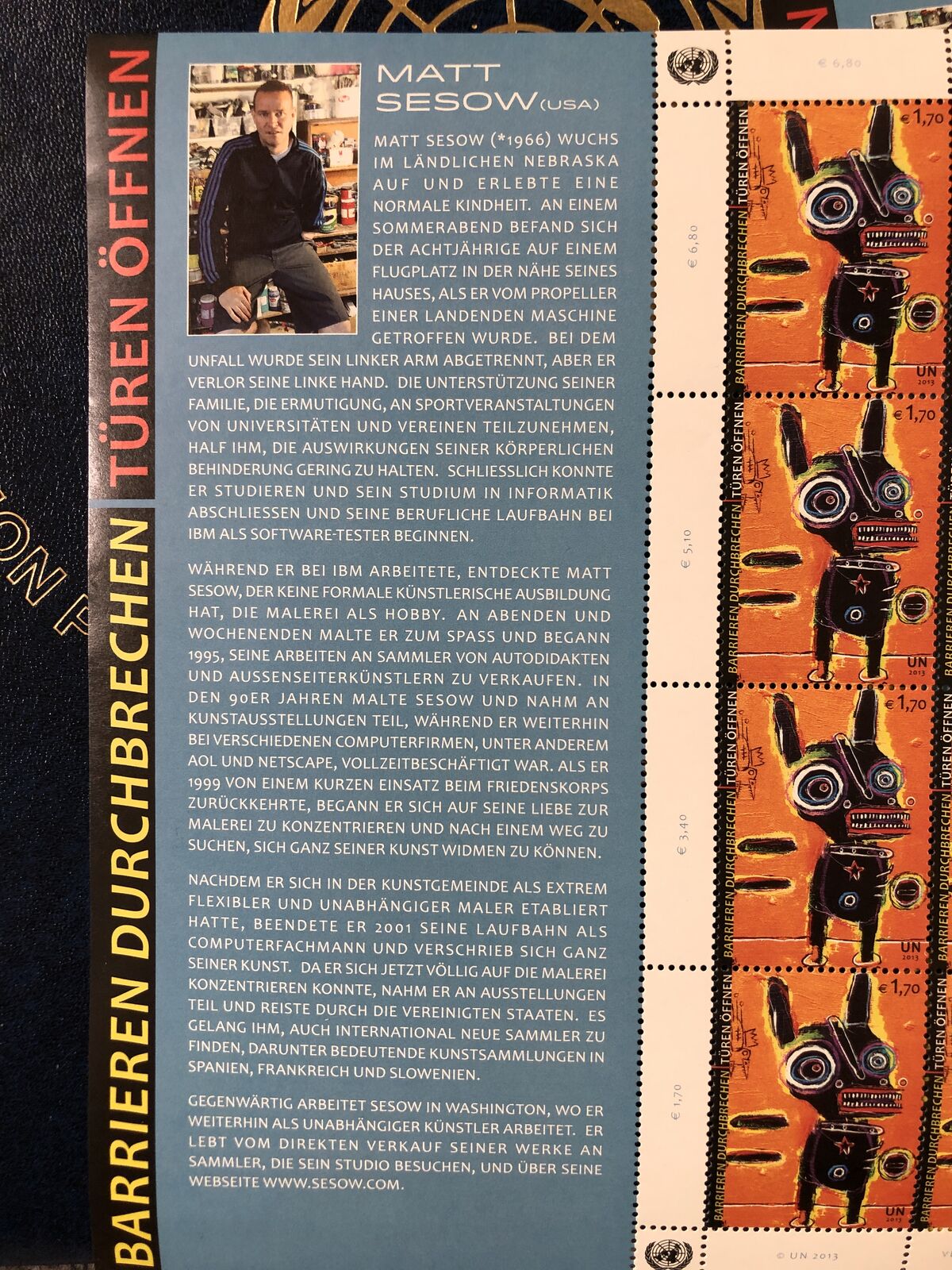
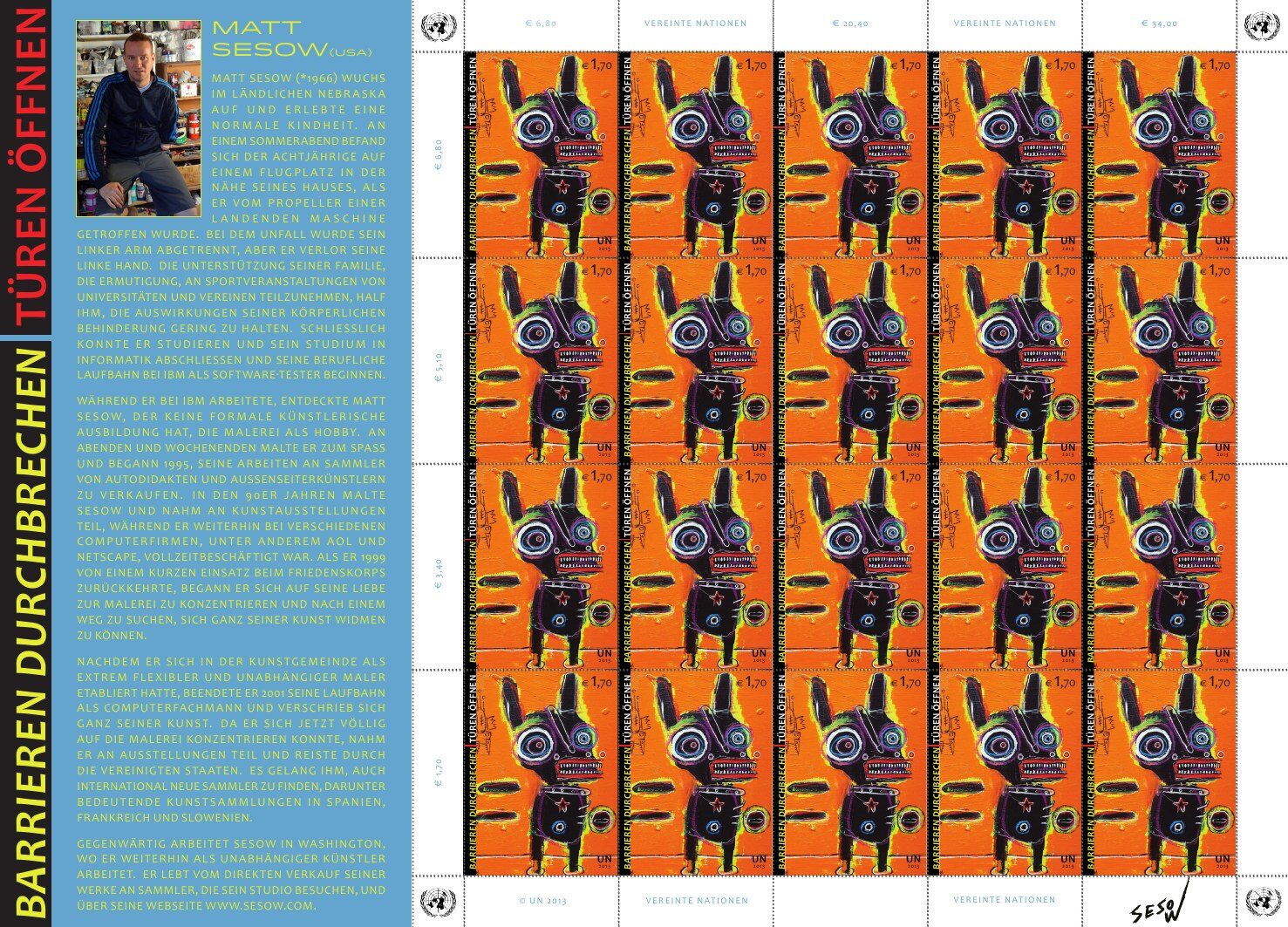
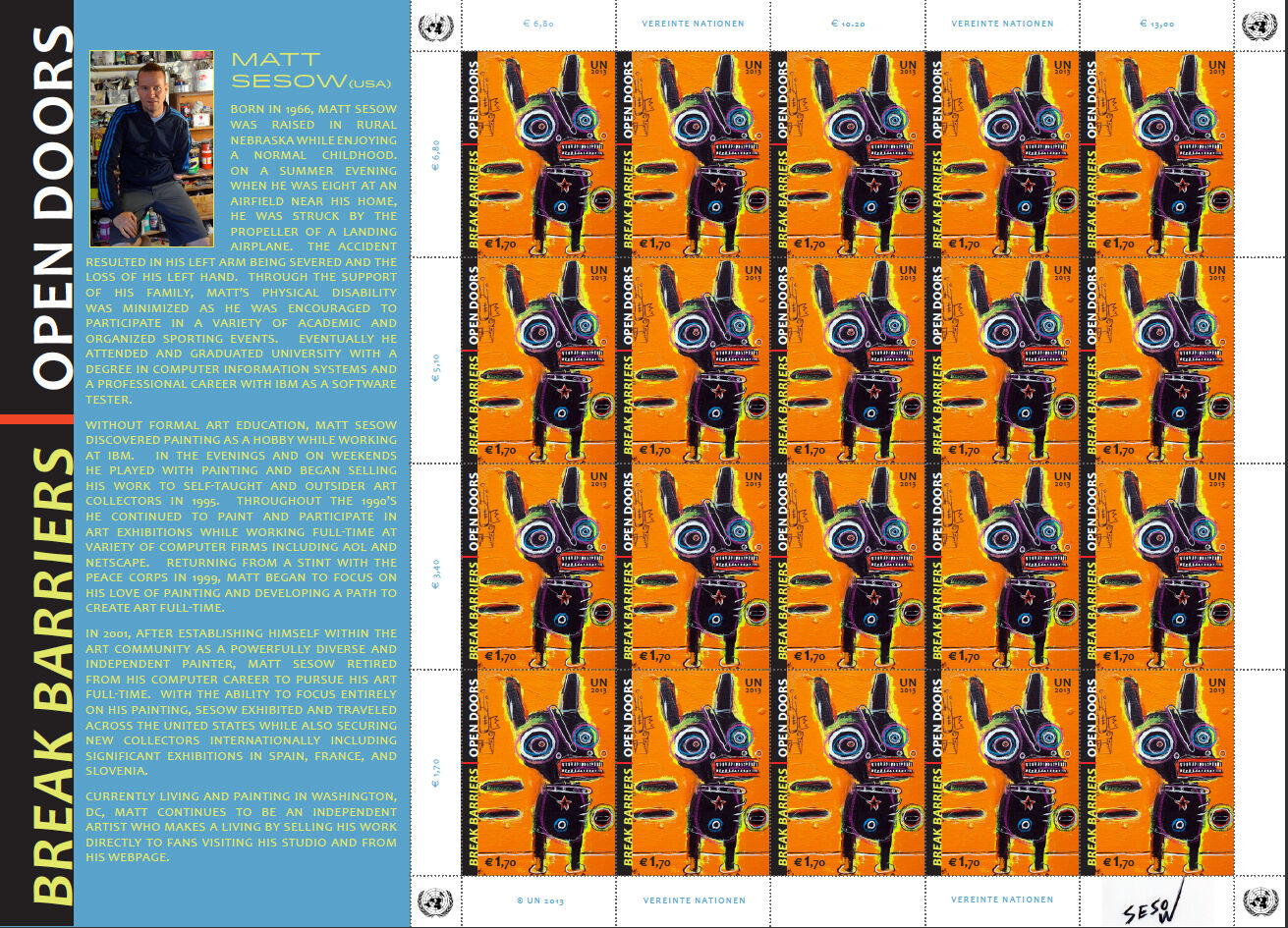
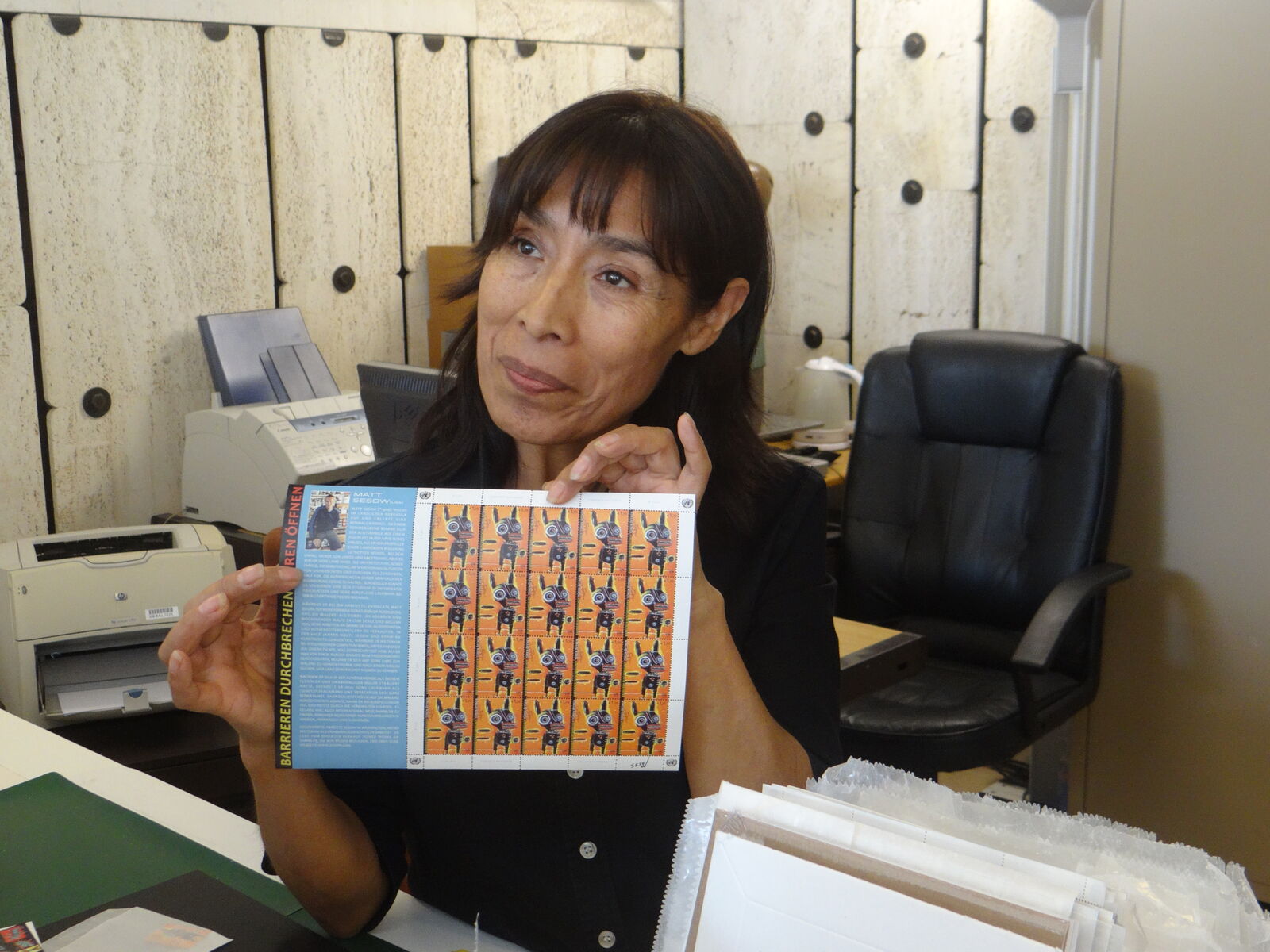
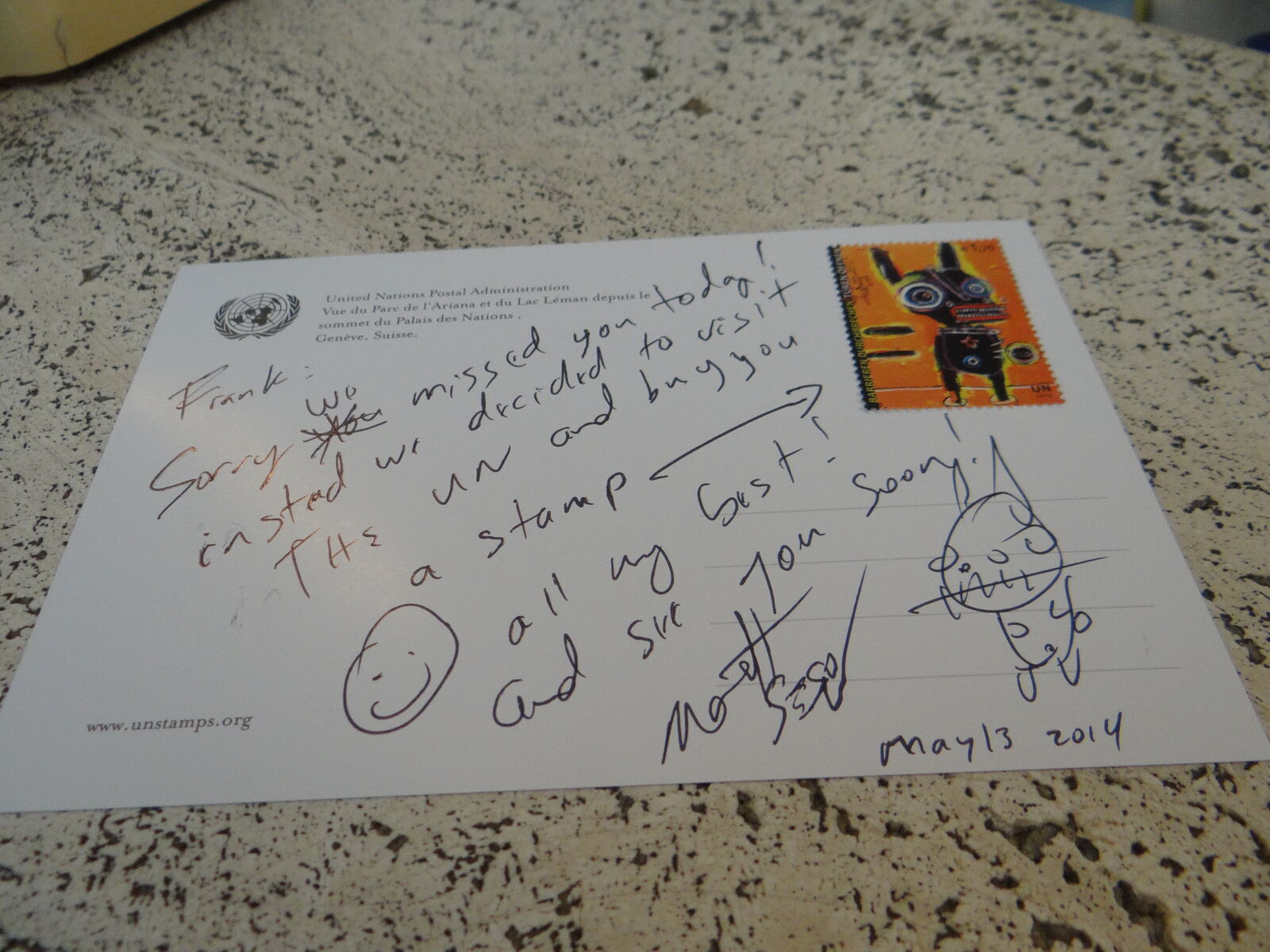
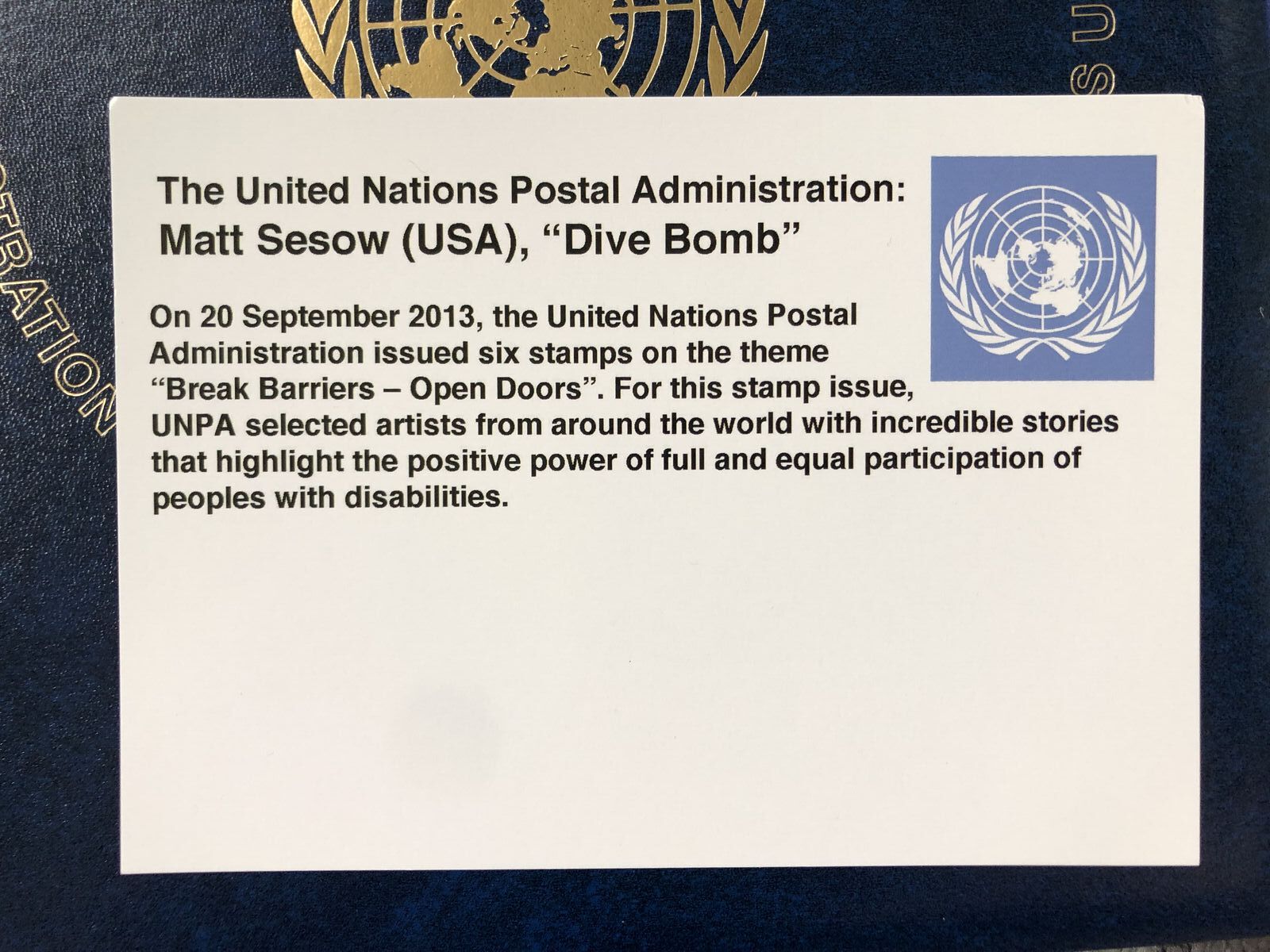
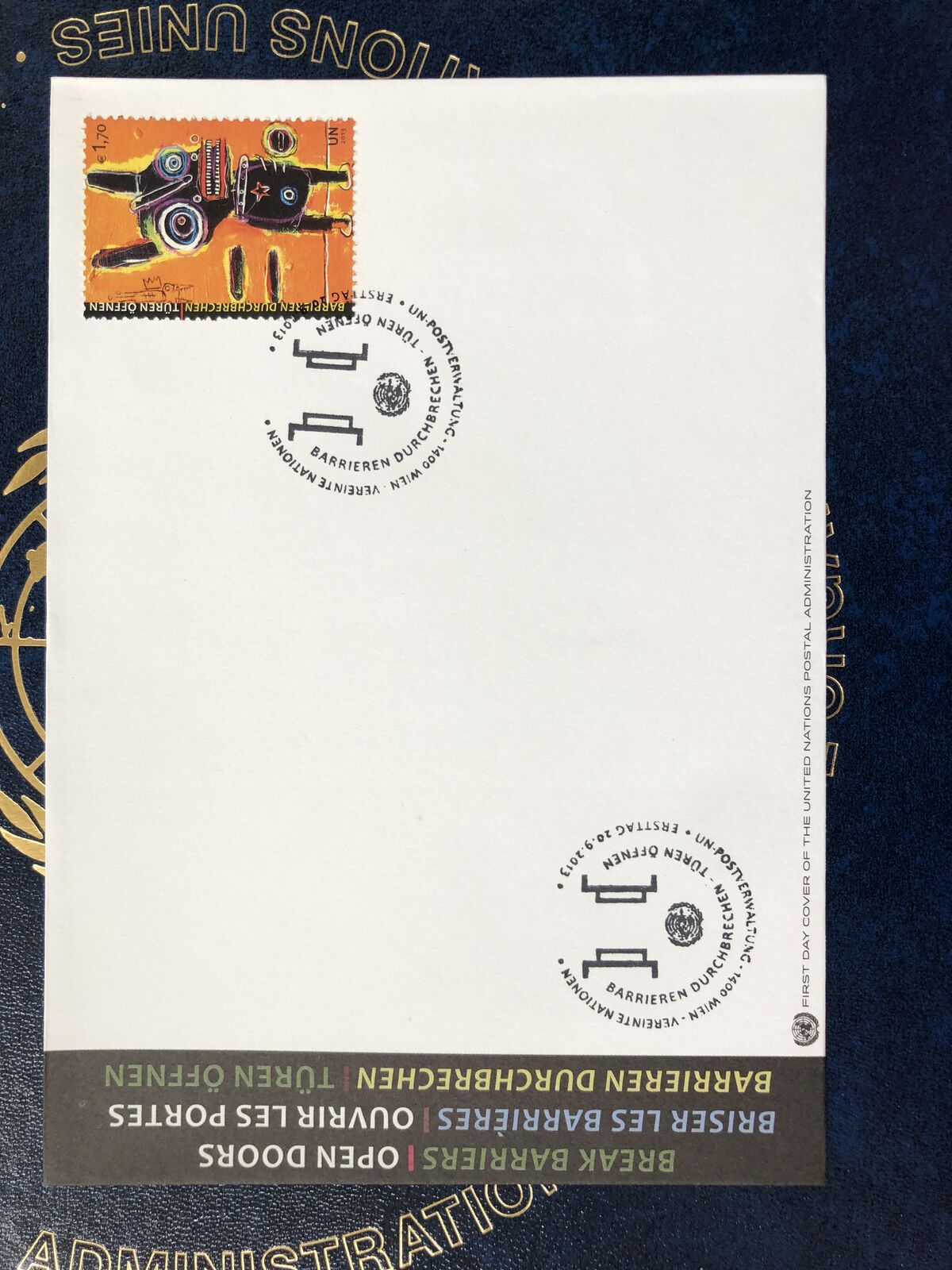
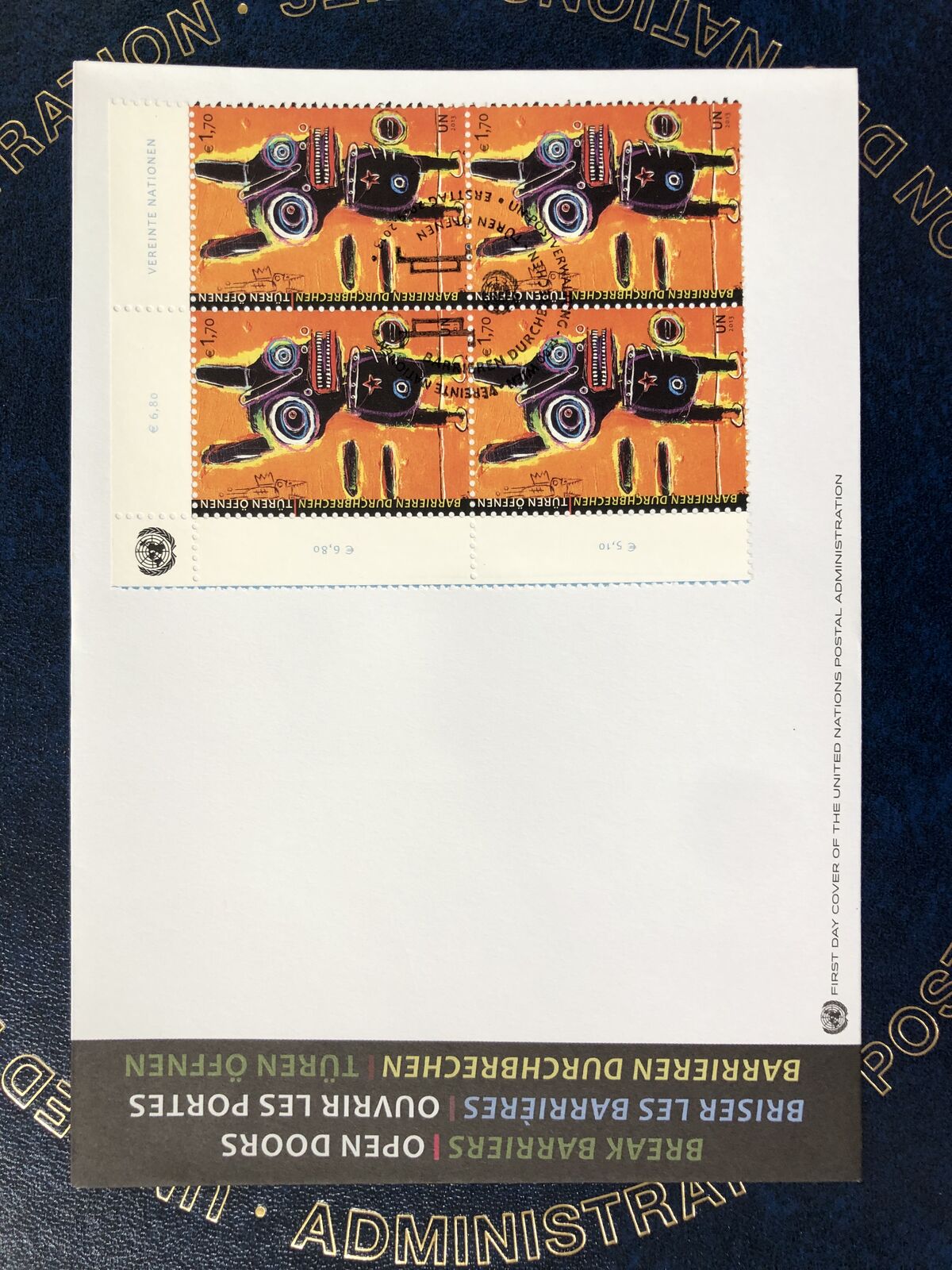
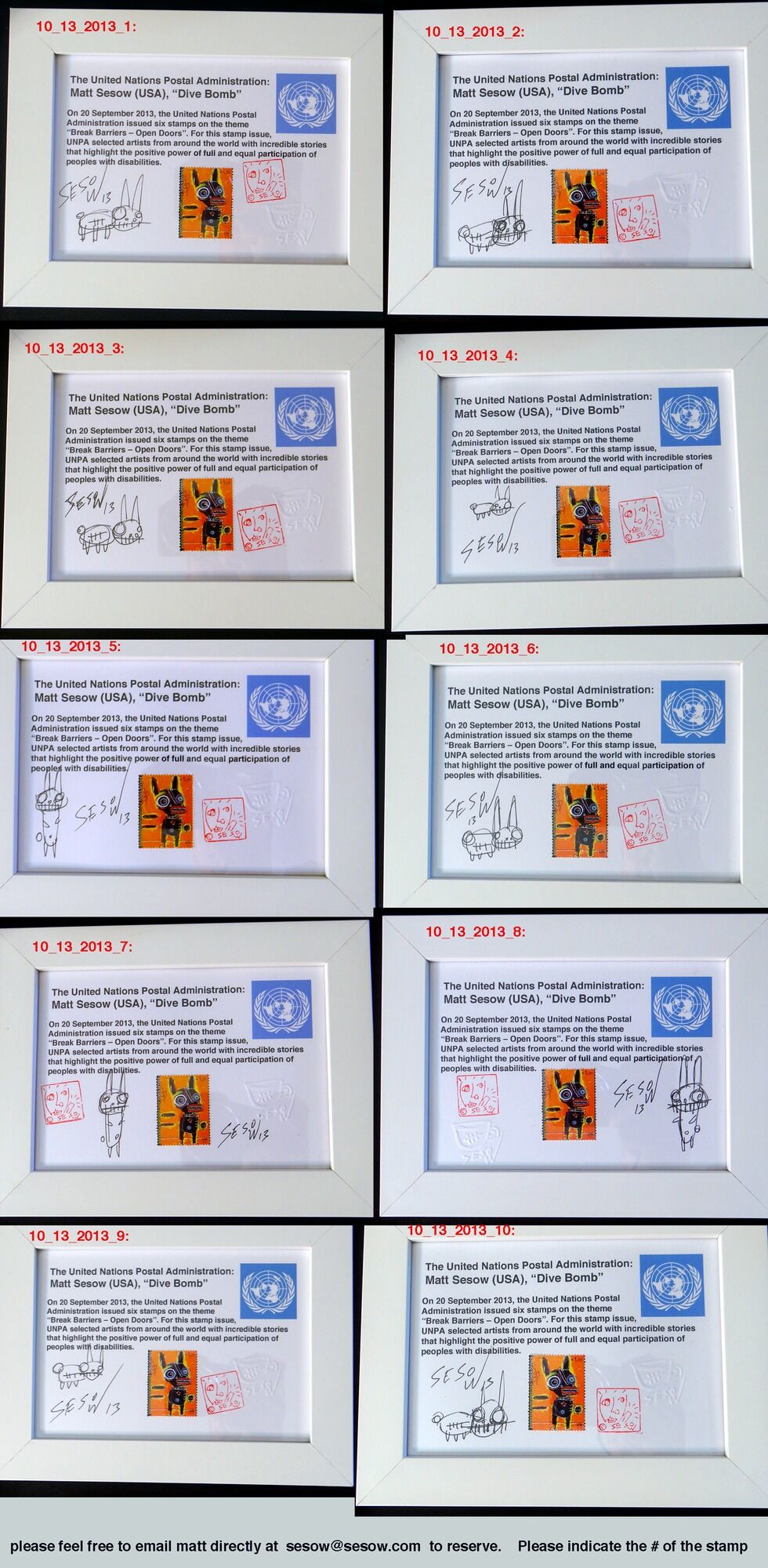
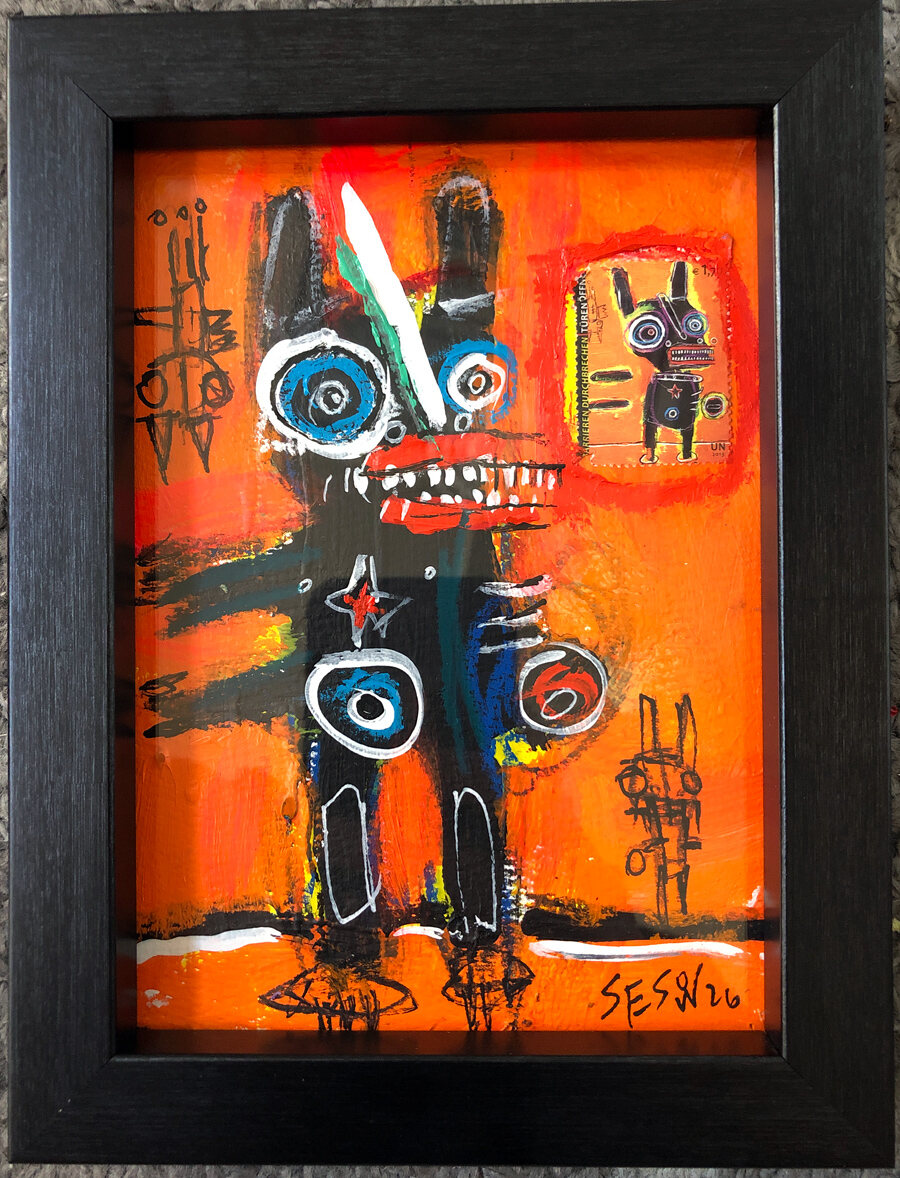
The sixth artist is Matt Sesow from the United States. His family lived near an airfield. When he was eight years old, the propeller of a landing plane struck him, and he lost his left arm and left hand. His selected work is titled Dive Bomb, and it shows a little dog. (It is Matt's bunny.)
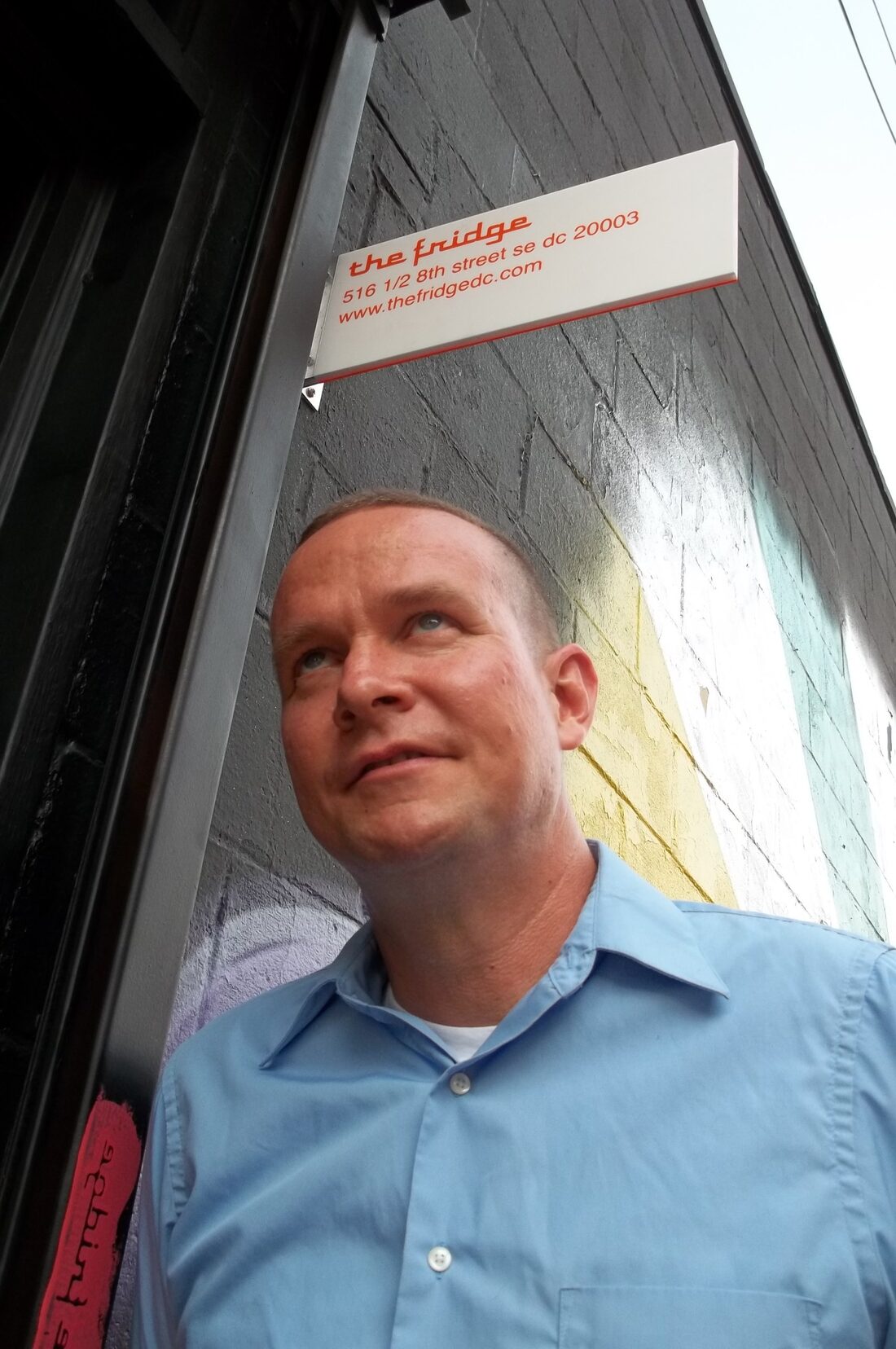
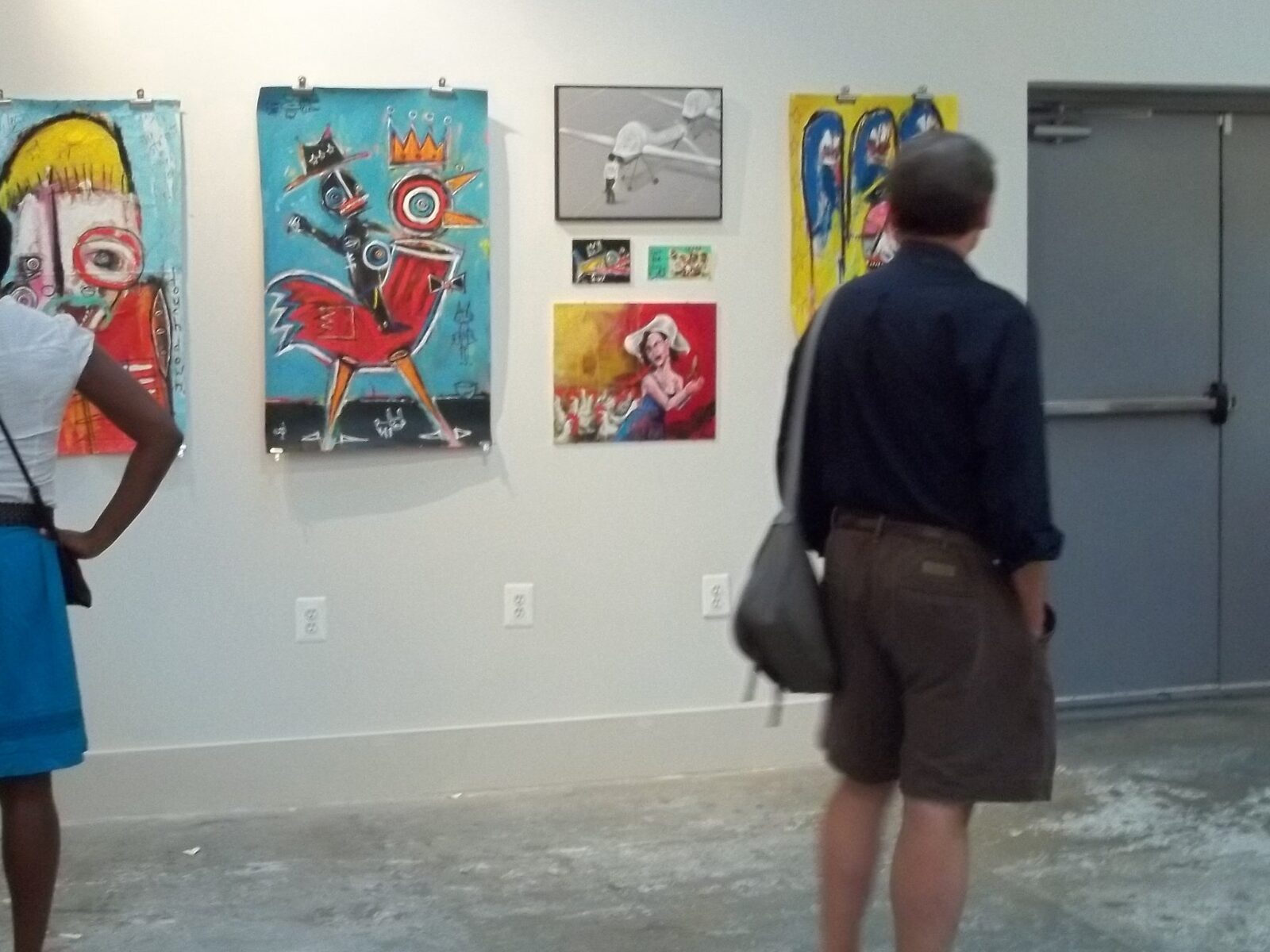
Failor: "Sesow didn't let his disability limit him. He was active in sports. As an adult he went into the computer industry, but the work he made as an amateur gradually earned him a place in the art world. He eventually quit his job and opened his own gallery in Washington, DC. His paintings are quite exaggerated; in this one, for example, the dog's eyes are exaggeratedly large. But his work is the kind that grows on you the more you look at it."
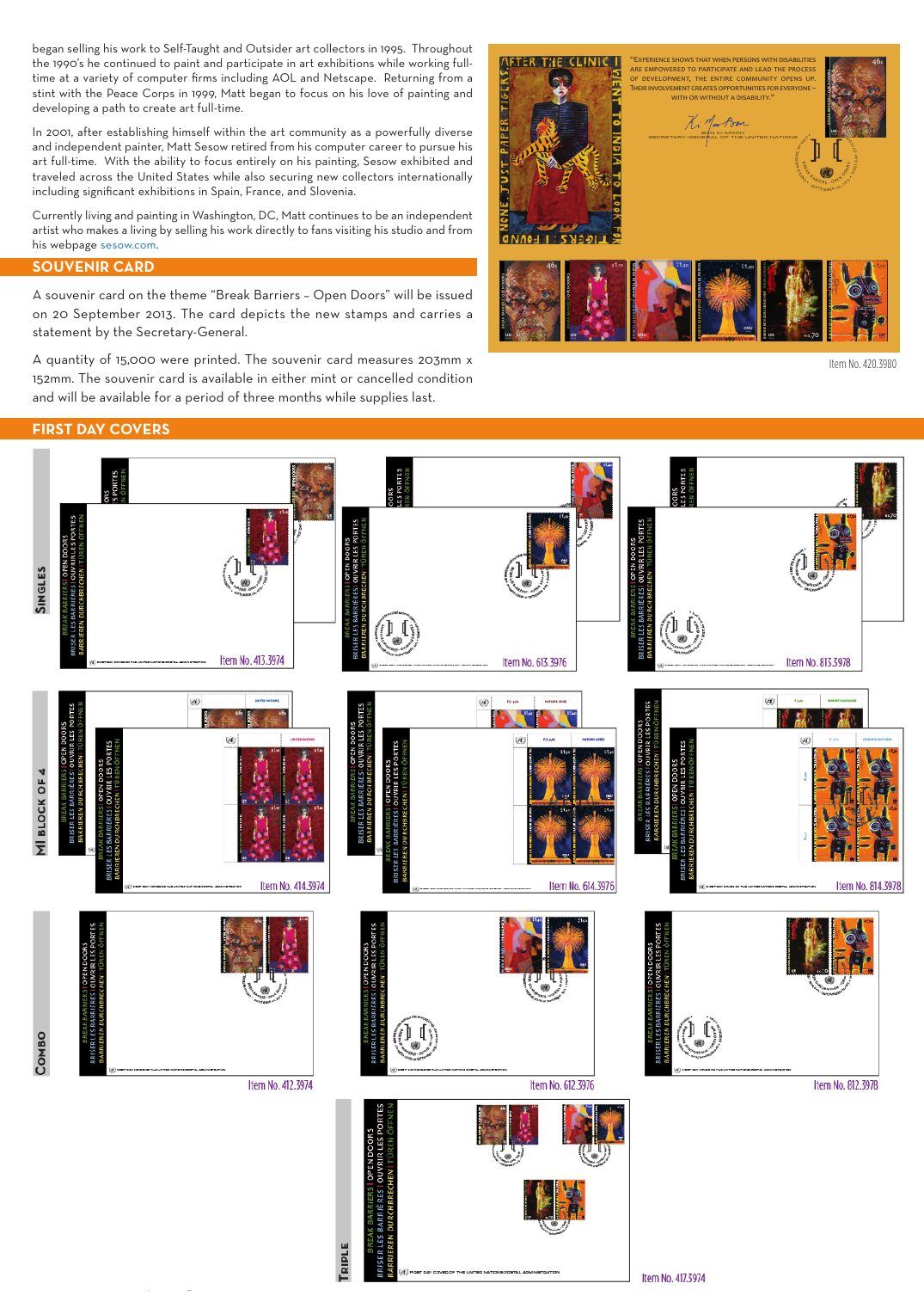
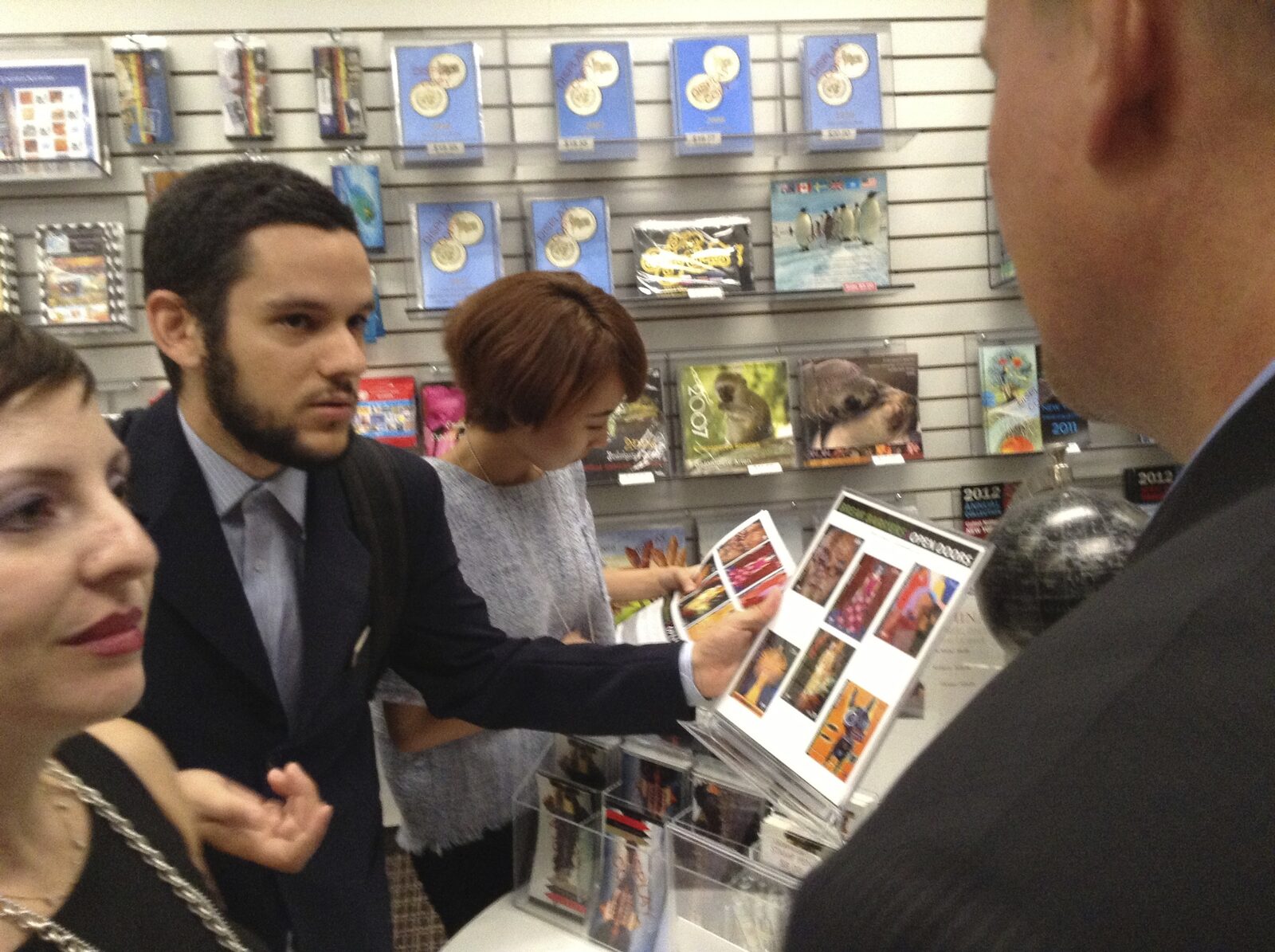
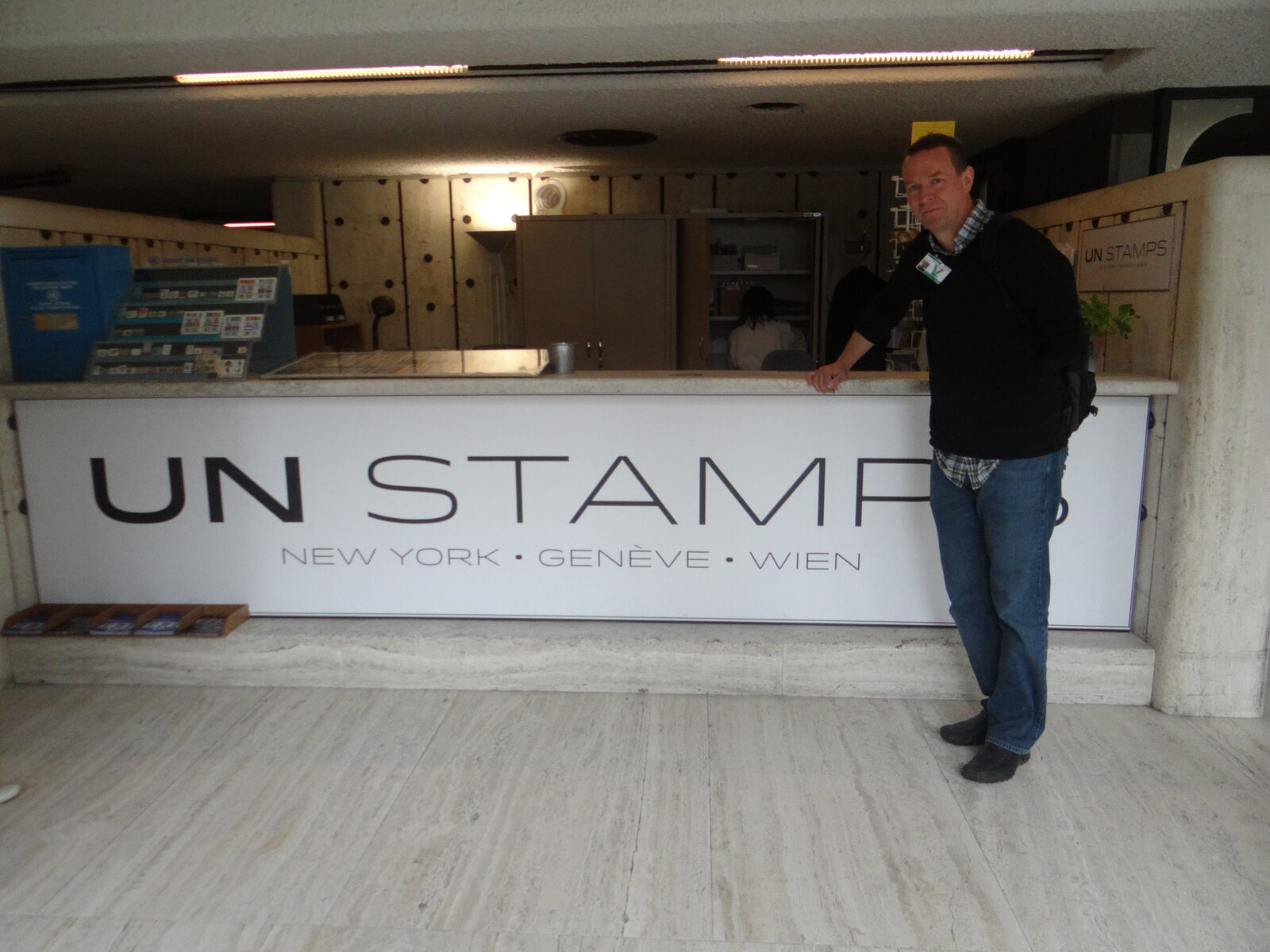
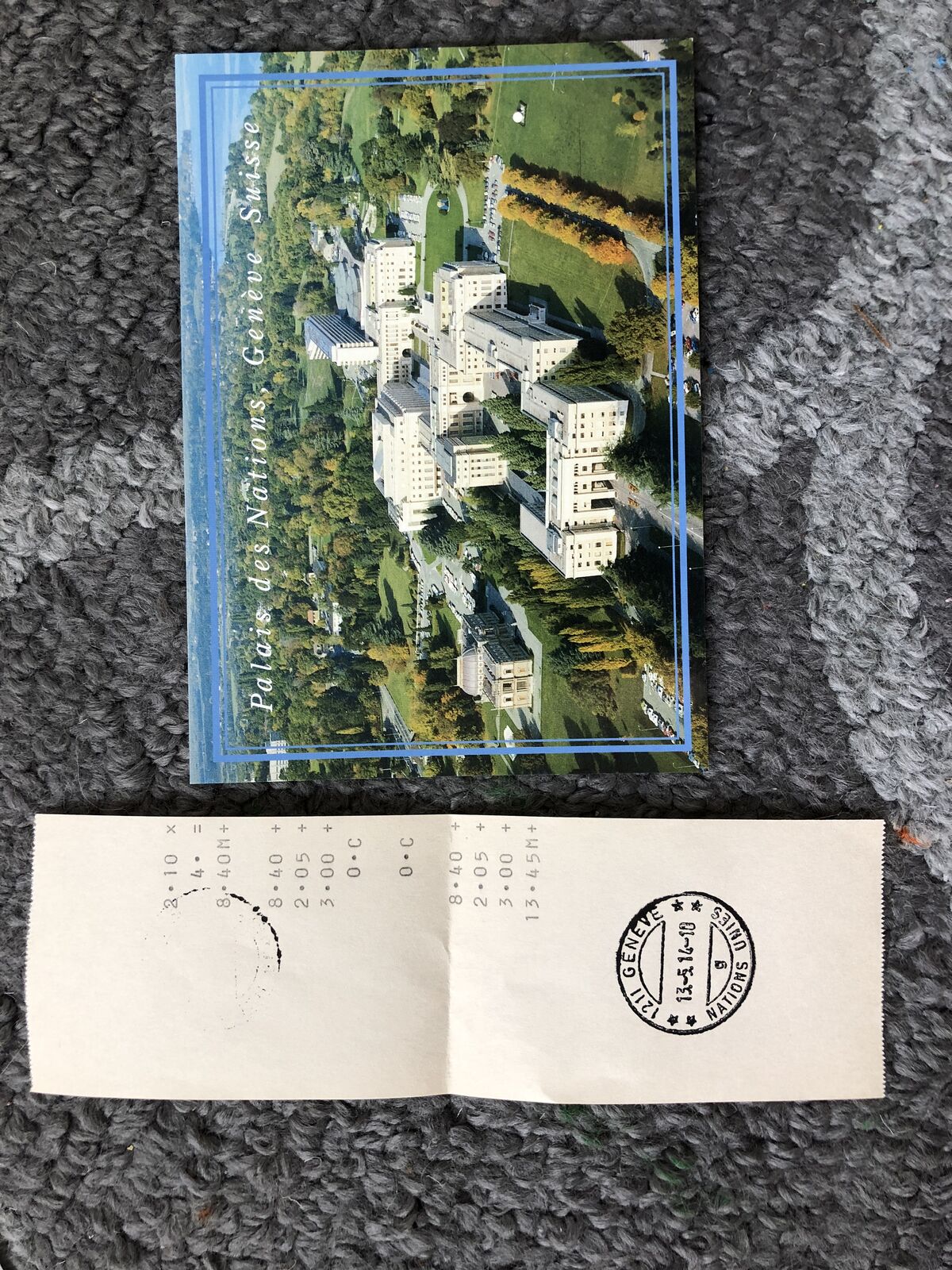
The Break Barriers, Open Doors stamps will be sold at the UN post offices at UN Headquarters in New York, Geneva and Vienna. They can also be bought by calling 1-800-234-8672 or through the UN Postal Administration website (www.unstamps.org).
Huang Liling, UN Radio, reporting from UN Headquarters in New York.
The report is in Mandarin. The Chinese text is a machine transcription corrected by hand; the English is our own translation, not the UN's. Lines in quotation marks are UNPA chief David Failor's words as broadcast in Chinese. The broadcast calls Matt's bunny a "little dog" (小狗). Source: news.un.org/zh/audio/2013/09/303752